
Area guide
Buying Land in Thullur
The core of the Amaravati capital in Guntur district: phase II pooling of 9,097 acres, the ring roads and the title checks every buyer needs.
9,097 acres patta land in Thullur
Phase II pooling
Amaravati named capital, 2 April 2026
Capital status
189.93 km, Rs 30,491 crore
Outer ring road
7.5% in all (CAG)
Stamp duty and fee
*Indicative range across districts and land types. Stamp duty, registration and conversion charges are additional. Local measurement units vary — every listing states the unit it is priced in. Not a valuation or an offer.
Micro-market record — Thullur
Rev. 2026 · Farmland India desk
District
Guntur; Thullur mandal
Pooling phase II
Launched 7 January 2026 at Vaddamanu; 9,097 acres patta and 7 acres assigned in Thullur mandal
Legal basis
Section 55(2), APCRDA Act
Phase I
About 34,000 acres pooled for the capital (29 villages)
Capital status
Parliament passed the AP Reorganisation (Amendment) Bill naming Amaravati the capital (2 April 2026)
Outer ring road
189.93 km, Rs 30,491 crore, draft notifications issued
Stamp duty and fee
7.5% in all on the higher of price and market value
Land price
Ask for allotment papers before any price
Land law is state law. These rules are maintained on the Andhra Pradesh page and apply to every district within it.
Thullur — land purchase legal rules
Andhra Pradesh lets any Indian resident buy farmland, but four separate laws decide whether a given plot can be sold at all: the 1973 ceiling Act, the 1977 Assigned Lands Act, the Scheduled Areas regulation and the 22-A prohibited list at the registration office. The state also repealed its farmland conversion law in 2025. This block applies to every district page in the state.
Who can buy: Andhra Pradesh has no farmer-only rule. The state’s land laws do not limit the purchase of agricultural land to agriculturists, so an Indian resident who does not farm can buy and register farmland. The limits run through the size of the buyer’s holding, the type of land and where it lies.
Ceiling on holdings: Under the AP Land Reforms (Ceiling on Agricultural Holdings) Act, 1973, a family unit of up to five (a person, spouse and minor children) may hold one standard holding, with a fifth more for each additional member up to two. A standard holding is 10 to 18 acres of double-crop wet land, 15 to 27 acres of other wet land, or 35 to 54 acres of dry land, depending on class. A purchase that takes a family above the ceiling must be declared within 60 days, and transfers by a holder who already exceeds it are void until the surplus is settled.
Assigned land: Government land granted to landless families, usually on a D-Form patta, is governed by the AP Assigned Lands (Prohibition of Transfers) Act, 1977. A transfer in breach is void, registering officers must refuse it, the Collector can resume the land, and the buyer faces up to six months in jail. A 2023 amendment let assignees sell agricultural assigned land 20 years after assignment, but registrations of this “freehold” land were frozen in 2024 for review. In September 2026 the government cleared about 9 lakh acres for registration and kept about 4 lakh acres under inquiry (Deccan Chronicle, 10 September 2026). Treat any plot that began as assigned land as unsafe until the sub-registrar confirms it is cleared.
The 22-A prohibited list: Section 22-A of the Registration Act, added by the state in 2007, lets the government list survey numbers that sub-registrars may not register: assigned land, government land, endowment and Wakf land, ceiling-surplus land and other notified land. About 28 lakh acres put on the list in 2022 have since been taken off, and new orders (GO 444 and GO 445) set the procedure for removals and additions. Ask for a written 22-A check on the exact survey number.
Scheduled Areas: In the Agency tracts of the Eastern Ghats, the AP Scheduled Areas Land Transfer Regulation, 1959 makes any transfer void unless it is to a member of a Scheduled Tribe or a tribal society, and presumes that land held by a non-tribal came from a tribal owner. Most of Alluri Sitharama Raju and Parvathipuram Manyam districts and hill mandals of Srikakulam, Vizianagaram, Anakapalli, the Godavari districts and the new Polavaram district are Agency areas. A non-tribal cannot validly buy land there, whatever the seller says.
Conversion after NALA: The AP Agricultural Land (Conversion for Non-Agricultural Purposes) Act, 2006, the NALA Act, was repealed by Act 20 of 2025, deemed in force from 3 September 2025. Tax already assessed is still payable and pending cases are decided under the old law, but there is no longer a separate conversion fee. Repeal does not mean freedom to build: zoning and layout approval still come from the development authority or the panchayat.
Registration and records: Deeds are registered at the sub-registrar office through the Registration and Stamps Department, which sends registered sales to the Tahsildar for mutation. Check the Adangal and ROR 1-B on Meebhoomi, then confirm that the name, extent and survey number match the deed; our stamp duty guide covers the charges.
NRI and OCI buyers: Under the RBI Master Direction on immovable property, NRIs and OCIs may not acquire agricultural land, a farmhouse or plantation property in India except by inheritance. Our NRI guide covers the options.
- No farmer-only rule
- Ceiling: 1973 Act
- Assigned land barred
- 22-A prohibited list
- Agency areas: tribal only
- NALA repealed 2025
- Meebhoomi records
- NRIs: inheritance only
Sub-area overview
Thullur — a core mandal of the Amaravati capital, where land is pooled or in question
Thullur is a mandal in Guntur district, and one of the core mandals of the Amaravati capital. Parliament passed the Andhra Pradesh Reorganisation (Amendment) Bill, 2026 naming Amaravati the capital on 2 April 2026 (News On AIR, 2 April 2026[11]). The capital was built on land pooled under the APCRDA Act: phase I pooled about 34,000 acres, and phase II began on 7 January 2026 at Vaddamanu in Thullur mandal, for 16,666.57 acres in seven villages across Thullur and Amaravati mandals. In Thullur the report lists 9,097 acres of patta land and 7 acres of assigned land (Telangana Today, 7 January 2026[9]).
Phase II is for a railway track, an Inner Ring Road and an International Sports City, and the Chief Minister has said that the existing 29-village footprint is too small for a Hyderabad-sized city. A buyer in Thullur is therefore not choosing between farm plots at different prices: they are choosing between land already pooled or being pooled, returnable plots held by farmers, and land outside the pooled blocks that may be pooled later. The Amaravati Outer Ring Road adds a second layer: a 189.93 km, six-lane, access-controlled road at about Rs 30,491 crore, crossing about 97 villages in 23 mandals, with draft notifications issued (The Hans India, 28 September 2026[10]).
Read the Guntur page for the district and the Andhra Pradesh page for state rules; our Meebhoomi guide explains the records. Across the Krishna, Palnadu holds Amaravati mandal.
- Capital core
- Land pooling
- Ring roads
- Title check
- NRI barred
Connectivity
How Thullur connects
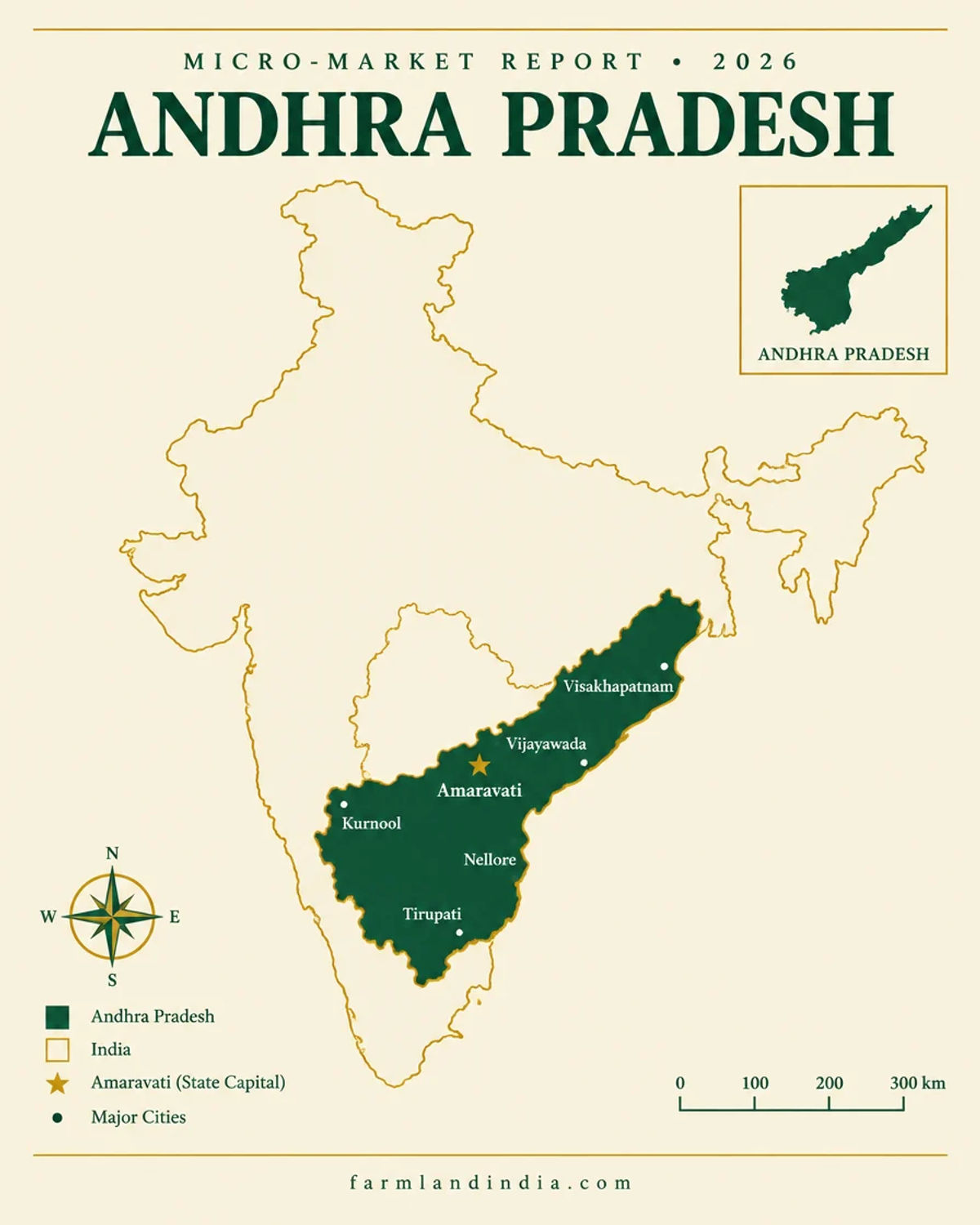
The capital sits on the Krishna between Vijayawada and Guntur. Distances are not route-checked.
By road, rail and air
Read this before relying on distances
Capital works change roads year by year, and a rail line and an inner ring road have no completion dates. Distances from a brochure assume roads that may not be built. Test the route you would use today.
Growth catalysts
Upcoming infrastructure & developments
Statuses are from dated reports. Government timelines are not guaranteed, and several items have no cost or schedule.
01Pooling
Phase II
02ORR
Notified (draft)
Agriculture & terrain
Soil, crops & water in Thullur
Krishna delta and black-soil land that the capital is replacing. District-level notes from this site’s district page.
Land and crops
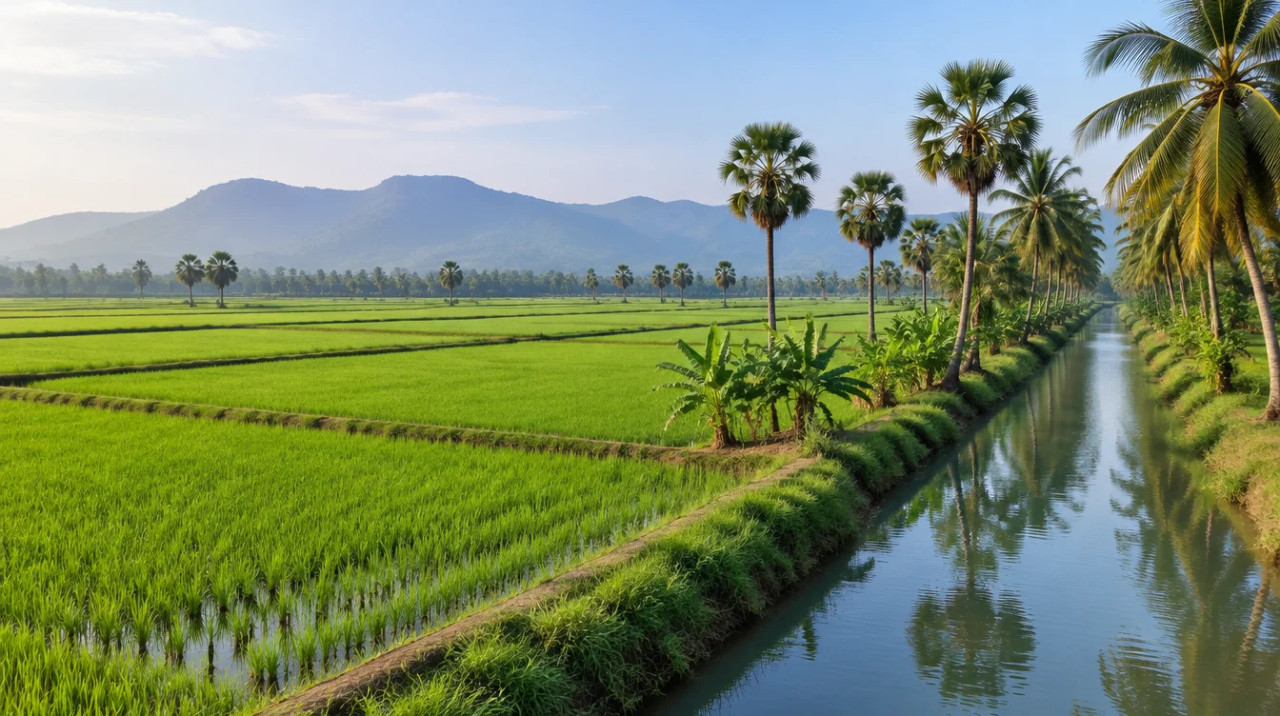
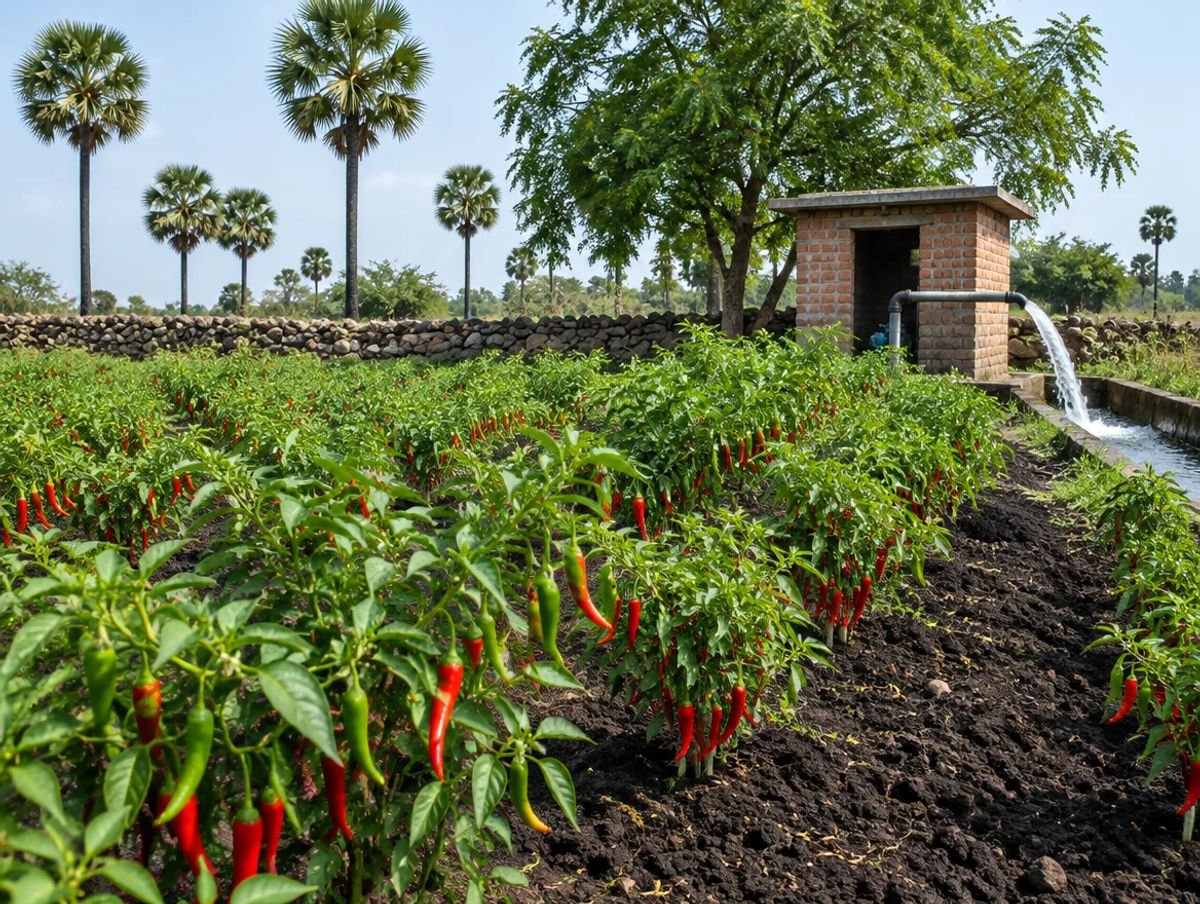
Guntur district grows chilli, cotton, paddy, banana, tobacco and vegetables on black cotton and red soils with delta alluvium near the river, and the Krishna delta canals feed the east and south; borewells and tanks serve the rest. Much of the land in the capital mandals has been pooled and is no longer farmed as before, so a farm yield record is a record of the past.
- Chilli
- Cotton
- Paddy
- Banana
Water and groundwater
The Central Ground Water Board put Andhra Pradesh’s stage of extraction at 29.83% in 2024, with 591 of 679 mandals safe (CGWB, 2024[5]). Ask for the mandal category and check the canal supply and the borewell record for any unpooled plot you consider.
Reading the field before the file
Ask the sub-registrar for recent registered sale values in the village you are looking at. For land, ask for the allotment papers or the registered chain of title, and compare three registered deeds from the same village in the last year.
Farmland India view
Why buyers look at Thullur
Reasons buyers look at this micro-market, with the evidence we have. Not a price forecast.
The capital now has a statute
Naming Amaravati the capital by Act of Parliament on 2 April 2026 removes a political question. It does not settle compensation, land titles or a schedule.
Pooling is large and still expanding
Phase I pooled about 34,000 acres and phase II adds 16,666.57 acres. The Chief Minister has said the footprint is too small, so more pooling may follow.
Returnable plots are a distinct market
Developed plots returned to farmers are traded separately from farmland. Ask for the allotment papers and the stage of development before paying.
Ring roads add a second layer
The Inner Ring Road in phase II and the Outer Ring Road with draft notifications are named, not scheduled. Pay for land that exists, not for lines on a map.
Listing data is not legal advice. Confirm the Meebhoomi record, the authority’s papers and the encumbrance with the revenue office and a lawyer before paying.
STRAIGHT TALK
Risks & challenges specific to Thullur
Specific to this micro-market, beyond the Guntur district and Andhra Pradesh-wide points.
Pooled land and returnable plots
Land pooled under the APCRDA Act is held by the authority, and farmers receive developed plots back. A seller must be able to show whether the survey number is pooled, returned, or outside the pooling, with the authority’s papers. A “near Amaravati” label is not a title.
Assigned land and the prohibited list
Land assigned by the government is protected by the Andhra Pradesh Assigned Lands (Prohibition of Transfers) Act, 1977[2]: Section 3 bars transfer, Section 4 allows resumption, Section 5 stops registration and Section 7 carries up to six months in jail. A 2023 amendment limits the bar to 20 years from assignment, 10 for house sites, after which the land is “freehold”, but registrations of freehold land were suspended from August 2024 for review. The government reported on 10 September 2026 that registration of 9 lakh acres had been cleared and 4 lakh acres were under inquiry (Deccan Chronicle[8]). Check the survey number against the Section 22-A prohibited list at the sub-registrar office before you pay any advance.
Scheduled Areas and tribal land
Under the Andhra Pradesh Scheduled Areas Land Transfer Regulation, 1959, a transfer of land in the Agency tracts is void unless it is to a Scheduled Tribe member or a tribal society, and land held by a non-tribal is presumed to have come from a tribal owner. The capital region is not known as an Agency area, but ask the Tahsildar to confirm in writing that the village lies outside one.
The land ceiling
Under the Andhra Pradesh Land Reforms (Ceiling on Agricultural Holdings) Act, 1973[1], a family of up to five may hold one standard holding, with the holding set by the class of land (for example 10 to 18 acres of double-crop wet land or 35 to 54 acres of dry land). Section 18 requires a declaration within 60 days if a purchase takes a holding above the ceiling, and transfers by excess holders are void. A small purchase is unlikely to raise the issue, but check the seller’s total holding.
Land use conversion changed in 2025
The Andhra Pradesh agricultural land conversion Act of 2006 was repealed by Act 20 of 2025, with effect from 3 September 2025; assessed tax is recoverable and unauthorised layouts are treated as converted on payment of tax on the basic value within one year (PRS: Act 20 of 2025[3]). Land use is still controlled by the development authority and the local body, so a plot needs the authority’s layout approval and zoning to be buildable.
Stamp duty and market value
A sale deed pays 5% stamp duty, 1.5% transfer duty and a 1% registration fee, 7.5% in all, on the higher of the price and the market value (CAG compliance audit report[6]). Market values were revised across the state from 1 February 2025 (Deccan Herald (PTI)[7]), and they can differ sharply within a region. Our stamp duty guide has the details.
Groundwater and coastal salinity
The Central Ground Water Board put Andhra Pradesh’s stage of extraction at 29.83% in 2024, with 591 of 679 mandals safe, 38 semi-critical, 2 critical, 9 over-exploited and 39 saline (CGWB, 2024[5]). That is a state figure, not a reading for Thullur. Near the river and in places wells can be saline; ask the Tahsildar for the mandal category and test a borewell before paying for irrigation land.
Compensation and disputes
An opposition member said in Parliament that compensation for farmers who gave land is still pending. Disputes over pooled blocks can affect title. Ask for the current status in writing.
Land outside the core may be pooled later
The Chief Minister has said the 29-village footprint is inadequate, and a 30,000-acre airport proposal across 11 villages is reported. Land outside today’s blocks could be affected later, in either direction.
NRIs and OCIs cannot buy this land
Under the RBI Master Direction on immovable property[4], NRIs and OCIs may not acquire agricultural land, a farmhouse or plantation in India except by inheritance. Residents of India who are Indian citizens can buy, subject to the points above. Our NRI land guide sets out what NRIs can and cannot do.
COMMON QUESTIONS
Frequently asked questions
Everything buyers, NRIs and investors ask before their first reviewed farmland purchase in Thullur.
Visit full wiki01 of 04
Can I buy land that is under capital pooling in Thullur?
Pooled land is held by the capital authority, which gives farmers developed plots back. Ask for the authority’s allotment papers and the registered chain of title, and confirm whether the village is in phase I, phase II or neither before you pay an advance.
02 of 04
What did phase II involve in Thullur?
It began on 7 January 2026 for 16,666.57 acres in seven villages across Thullur and Amaravati mandals, under section 55(2) of the APCRDA Act. In Thullur mandal the report lists 9,097 acres of patta land and 7 acres of assigned land.
03 of 04
Is “near Amaravati” a title?
No. The capital region mixes pooled land, assigned and government land, and private land. Check the mandal, the village and the survey number, because Amaravati mandal is in Palnadu district, not Guntur.
04 of 04
Can an NRI buy land in Thullur?
NRIs and OCIs cannot buy agricultural land, a farmhouse or plantation in India except by inheritance (RBI Master Direction). Other categories of land need legal advice on the exact plot.
Transparency
Sources for this page
Law and courts
- [1]Andhra Pradesh Land Reforms (Ceiling on Agricultural Holdings) Act, 1973 (India Code) — indiacode.nic.in
- [2]Andhra Pradesh Assigned Lands (Prohibition of Transfers) Act, 1977 (India Code) — indiacode.nic.in
- [3]Andhra Pradesh Act 20 of 2025: repeal of the agricultural land conversion Act (PRS) — prsindia.org
- [4]Reserve Bank of India: Master Direction on acquisition and transfer of immovable property — rbi.org.in
Government
- [5]CGWB: Dynamic Ground Water Resources of Andhra Pradesh, 2024 — cgwb.gov.in
- [6]CAG: Compliance Audit Report, Andhra Pradesh, Chapter IV, Registration and Stamps — saiindia.gov.in
News and reports
- [7]Deccan Herald (PTI): Revised land values take effect in Andhra Pradesh, 1 February 2025 — deccanherald.com
- [8]Deccan Chronicle: AP clears registration of 9 lakh acres of freehold lands, 10 September 2026 — deccanchronicle.com
- [9]Telangana Today: Phase II of land pooling for Amaravati begins, 7 January 2026 — telanganatoday.com
- [10]The Hans India: Rs 30,491 crore Amaravati ORR takes shape, 28 September 2026 — thehansindia.com
- [11]News On AIR: Parliament passes AP Reorganisation (Amendment) Bill, 2026, 2 April 2026 — newsonair.gov.in
General information, not legal advice. Reviewed November 2026; project statuses are dated in the text.
For developers
Ready to explore Thullur farmland?
Browse reviewed projects and individual land parcels across Thullur — or if you own land here, list it with platform review and reach serious buyers.