Lal Dora and Abadi Land Explained for Buyers (2026)
What lal dora and abadi land are, how village house plots are recorded, and what to check before buying one.
Lal dora and abadi are the names for the inhabited core of a village. Records for these plots differ from farm field records, which is why a buyer needs to know what proof exists. This guide explains the terms, the SVAMITVA scheme and a practical checklist.
What lal dora and abadi mean
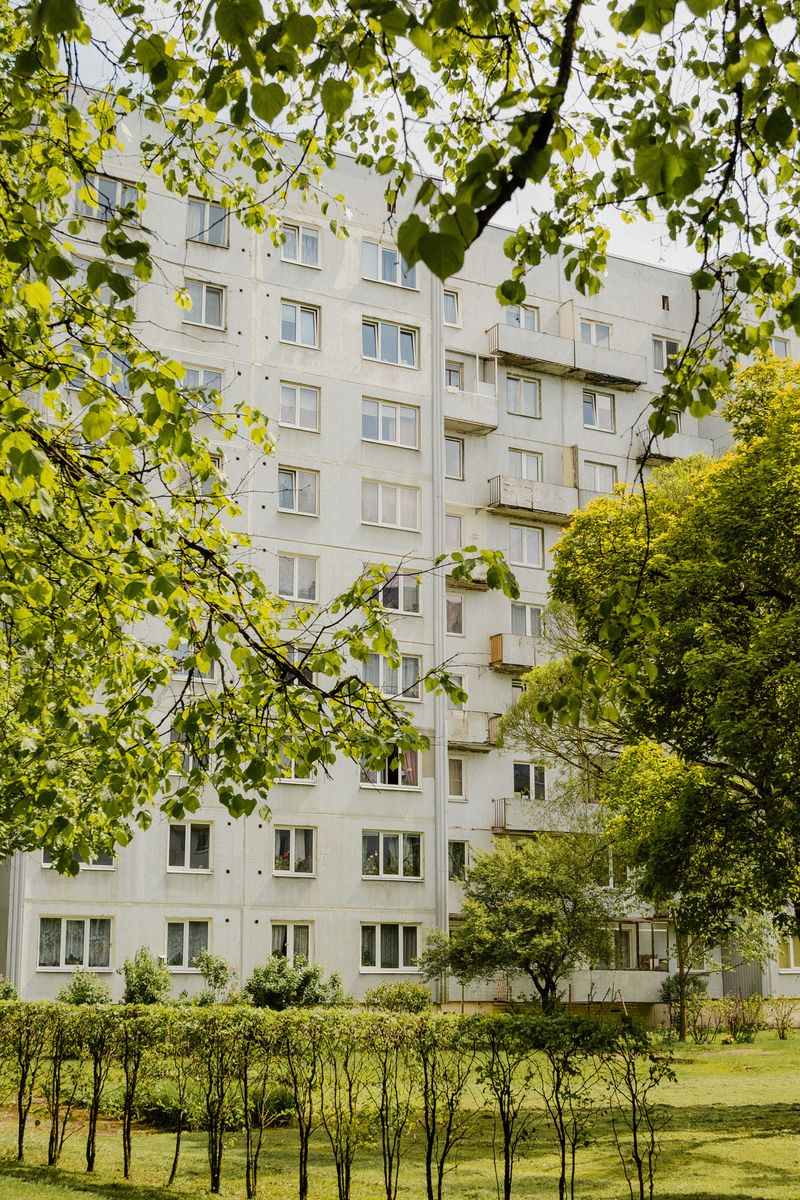
Every Indian village has a settled core where families have lived for generations: houses, lanes, cattle yards and common spaces. This area is called abadi (आबादी) in Uttar Pradesh and Madhya Pradesh and lal dora (लाल डोरा) in Punjab and Haryana, according to a PIB document on the SVAMITVA scheme. A Tribune report on Punjab defines lal dora as land that is part of the village abadi and is used for non-agricultural purposes only.
Lal dora is often translated as "red thread", but we could not find an official source that explains the origin of the term, so we do not rely on it. What matters to a buyer is the practical point: land inside the abadi is residential land of the village, not a farm plot, and it is usually not recorded the same way as a field.
The official notes are clear on why the record is different. The PIB document says that earlier government surveys covered only agricultural land, so many village households had no formal record of their homes and their claim rested on actual possession. That is the gap that the SVAMITVA scheme set out to close.
What the statutes say
The legal treatment of abadi land is state specific, and we have opened only parts of it.
| State | What we could read | Source |
|---|---|---|
| Uttar Pradesh | The Uttar Pradesh Revenue Code, 2006 defines "abadi" or "village abadi" in section 4(1) as an area in a village that, on the commencement date, was used for residence and related purposes. Section 63 lets the Sub-Divisional Officer earmark certain classes of land for abadi sites, and lets the Land Management Committee allot such land for building houses with the officer's approval | UP Revenue Code text on vaad.up.nic.in (the excerpt we read did not give the full text of section 4(1)) |
| Haryana and Punjab | The Punjab Village Common Lands (Regulation) Act, 1961, as applied in Haryana, defines shamilat deh in section 2(g) as including land recorded as Shamilat Deh, but excluding abadi deh. So abadi deh is separate from the village common land that vests in the panchayat | PRS copy of Haryana Act 18 of 1961 (PRS warns that its OCR text is unverified) |
| Rajasthan, Himachal Pradesh, Uttarakhand | We could not confirm the statutory definition or treatment | None opened |
The exclusion of abadi deh from shamilat deh in the Haryana and Punjab Act is useful for a buyer. It means that a house plot in the abadi is not automatically panchayat common land, but it also means that the record that proves who owns it may sit in a different register from the jamabandi. We could not confirm which register that is in each state.
SVAMITVA: how village house plots are being recorded
SVAMITVA is a Central Sector scheme that maps inhabited rural land using drones and gives each household a Record of Rights. The PIB document states that the pilot began on 24 April 2020 and the national rollout on 24 April 2021. Pilot states were Andhra Pradesh, Haryana, Karnataka, Madhya Pradesh, Maharashtra, Punjab, Rajasthan, Uttar Pradesh and Uttarakhand.
- Households receive property cards, which the note describes as legal ownership cards or title deeds.
- The note reports about 36 lakh cards in nearly 29,263 villages as of 31 March 2022, and says the cards can be viewed and downloaded in the DigiLocker app.
- The stated aims include fewer property disputes and letting owners use the land to obtain bank loans.
- The note says the scheme is backed by amendments in state Land Revenue Codes and Acts, but does not set them out.
The PIB document lists the states where cards have been issued as Haryana, Karnataka, Madhya Pradesh, Rajasthan, Maharashtra, Uttar Pradesh, Uttarakhand and Ladakh as of its date, and does not explain why Punjab and Andhra Pradesh are not on that list. The note is from 2022 and the position will have moved, so ask the panchayat or the district revenue office whether your village has been mapped. A Tribune report on Punjab describes a state plan to prepare an inventory of properties in lal dora areas through drone mapping with the Survey of India.
Why this matters to a farmland buyer
Farmland India is a marketplace for agricultural land and farmhouse plots, so lal dora and abadi come up in three ways.
- Farmhouse next to a village. A plot on the edge of the abadi may be advertised as "village land". It may be abadi, it may be a field adjoining it, or a part of each. The khasra and the village map decide this, not the seller's description. Read the bhu naksha cadastral map and khasra and khatauni first.
- No change of land use needed, maybe. Abadi land is already residential in the village record, so the conversion process that applies to a farm field may not apply. We did not confirm this for any state, so ask the revenue office in writing. For the farm-field route see change of land use in India.
- Different paper trail. Where there is no jamabandi entry, the proof of ownership may be a SVAMITVA property card, a panchayat record, a registered deed, house tax receipts or a combination. Each is weaker than a clean registered chain of title.
Ask what the record is, not just whether it exists
A property card or a panchayat certificate shows what the village record says today. It does not prove that the seller's title is clean, that no co-sharer has a claim, or that the plot is free of encroachment on a lane or common land. Ask for the registered deed chain and walk the boundary with the village elders.
Buyer checklist for abadi and lal dora plots
- Ask which record proves ownership: SVAMITVA card, panchayat record, registered deed or old sale papers.
- Check whether the village has been mapped by drone and whether the card is on DigiLocker.
- Match the plot boundary on the ground with the map. Lanes and drains in a village often change over time.
- Look for common-land encroachment. Panchayat land cannot be sold by a private person. See gram sabha, nazul and bhoodan land.
- Check house tax or panchayat tax records and any pending dues.
- Register the sale deed and complete the village record change that applies. We could not confirm the mutation process for abadi plots in any state, so ask the panchayat secretary and the sub-registrar.
- Confirm access by a public path and the drainage and electricity position.
- Ask whether a bank will lend against the plot. The SVAMITVA note says cards are meant to enable loans, but lenders set their own rules.
The general steps for title checking are in how to verify land title and the land due diligence checklist. The measure of area in the deed may use a local unit; see land measurement units in India.
What is unconfirmed
We could not confirm: a single legal definition of lal dora in Punjab or Haryana from a statute or rule; whether abadi land is outside conversion rules in each state; the mutation procedure for abadi plots; the stamp duty position for abadi plots; and the present issuance status of SVAMITVA cards in each state. We used a 2022 PIB document and a news report on Punjab, and the Revenue Code excerpt for Uttar Pradesh. This page is DRAFT until the state-level rules are checked.
Frequently Asked Questions
What is lal dora?
What is abadi land?
Is lal dora the same as abadi?
Is lal dora land agricultural land?
What is a SVAMITVA property card?
Where can I get my SVAMITVA card?
Can I buy lal dora land as an outsider?
Is abadi land the same as panchayat common land?
Do I need a change of land use for abadi land?
Is a SVAMITVA card proof of clean title?
Sources
- SVAMITVA scheme document, Press Information Bureau (2022)
- The Tribune: Punjab to prepare inventory of properties within villages' lal dora area
- Uttar Pradesh Revenue Code, 2006 (updated copy), vaad.up.nic.in
- Punjab Village Common Lands (Regulation) Act, 1961 as applied in Haryana (Act 18 of 1961), PRS copy