
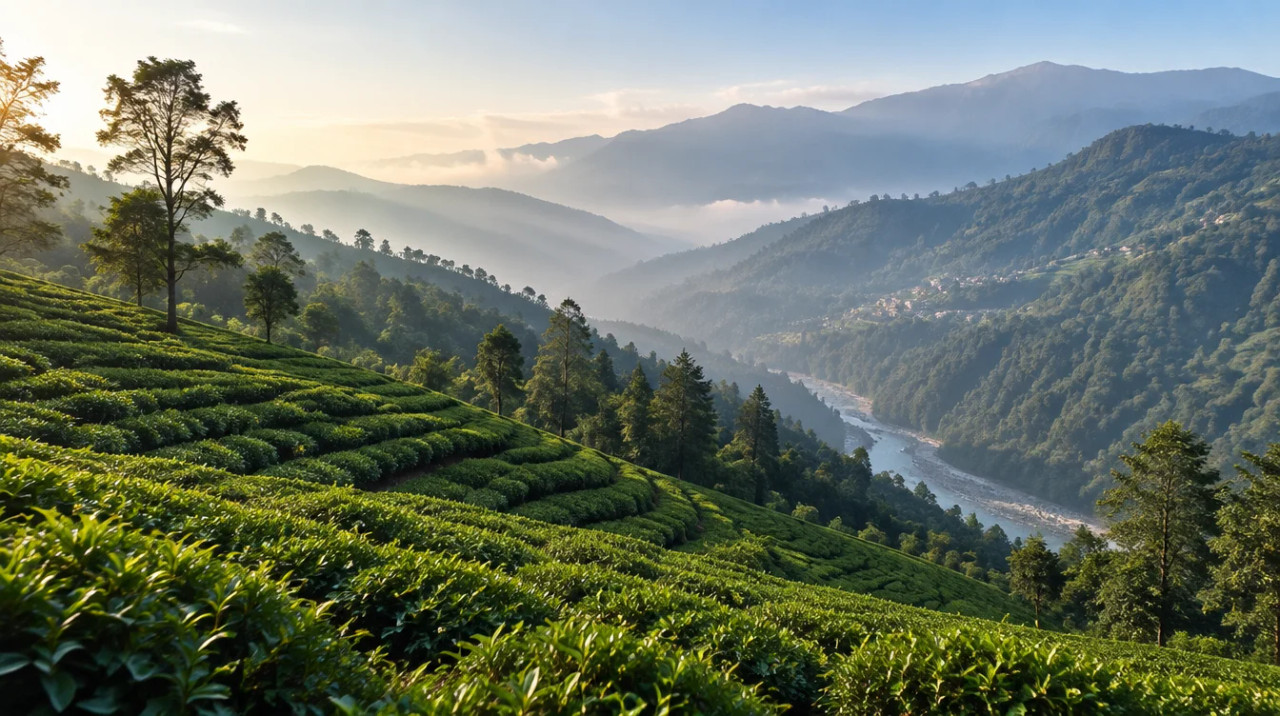
District guide
Buying Land in Namchi
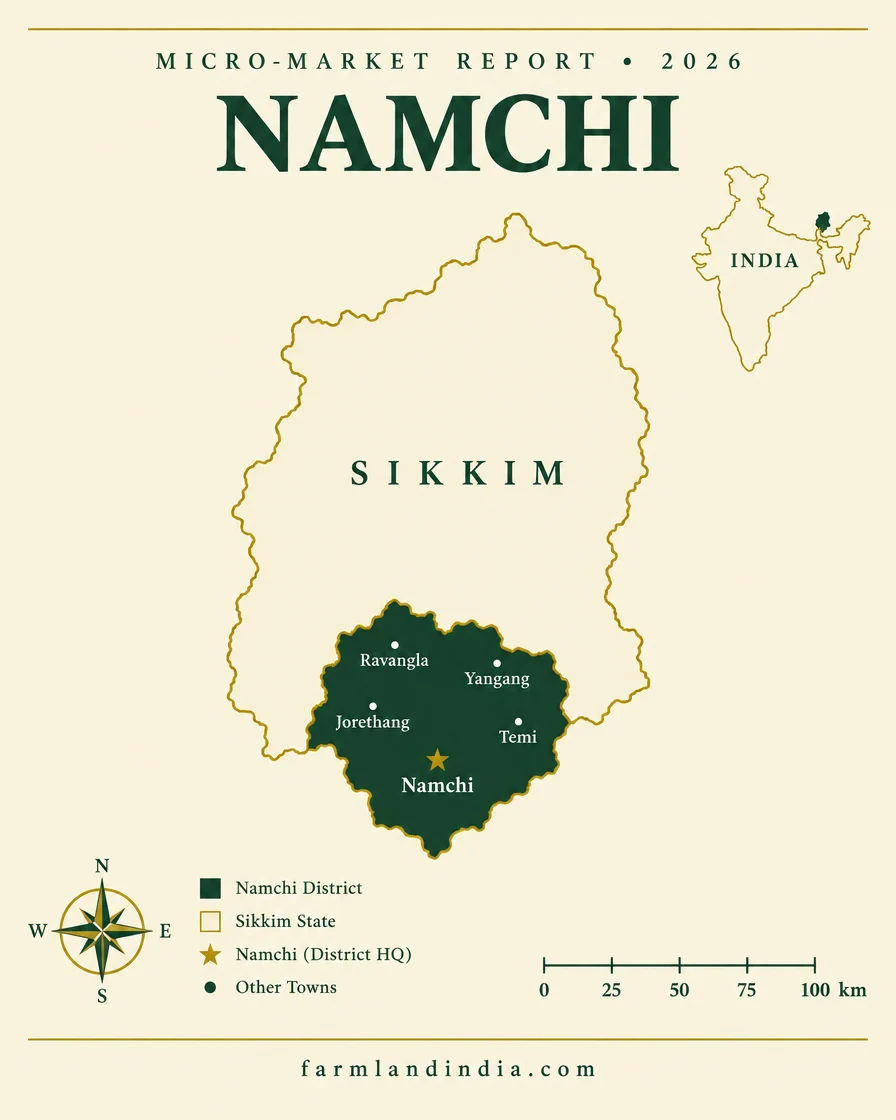
Namchi, Jorethang, Ravangla and Temi in south Sikkim: land is open mainly to Sikkimese, with tea, tourism circuits and a skywalk as local drivers.
750 sq km
Area (district portal)
1,46,850
Population (Census 2011)
150
Villages (district portal)
Rs 220 crore
Bhaleydhunga skywalk (PM-DevINE)
*Indicative range across districts and land types. Stamp duty, registration and conversion charges are additional. Local measurement units vary — every listing states the unit it is priced in. Not a valuation or an offer.
District land record — Namchi
Rev. 2026 · Farmland India desk
State
Sikkim
Formation and division
Namchi district (formerly South Sikkim) since December 2021, with Namchi, Jorethang, Ravangla and Yangang subdivisions (India Today NE[6])
Key markets
Namchi · Jorethang · Ravangla · Yangang · Temi
Demand anchors
Temi tea, the Namchi–Temi–Ravangla tourism circuit and the Bhaleydhunga skywalk
Rail and road
No railway in the district
Size and population
750 sq km and 1,46,850 people at Census 2011, across 150 villages, per the district portal[5]
Pricing unit
No official farmland price series is published for Namchi. Ask the sub-registrar for recent registered sale values in the village you are looking at. Ask for plot area in square metres and acres in writing
Local units
Have the surveyed area written in the deed
Land records
Parcha and khazana receipt, with registration through the state registry portal[3]
Land law is state law. These rules are maintained on the Sikkim page and apply to every district within it.
Namchi — land purchase legal rules
Sikkim is one of the few states where most Indians cannot buy land at all. It joined India in 1975 on terms set out in Article 371F of the Constitution, which kept in force the laws that already applied in the kingdom. Those old laws, and the rules built on them, decide who may own land, and they protect the Bhutia and Lepcha communities in particular. What follows describes the rules as the courts and the government state them; it is not legal advice, and any purchase needs a local lawyer and the Sub-Divisional Magistrate’s office. This block applies to every district page in the state.
Article 371F(k): Clause (k) protects every law in force in Sikkim immediately before 26 April 1975. The Sikkim High Court restated in April 2026 that these old laws, including Revenue Order No. 1, are protected and cannot be set aside by a court; only the executive and the legislature can change them (Sikkim High Court, Puspa Mishra v State of Sikkim, WP(C) 45/2020, 6 April 2026).
Revenue Order No. 1 (1917): Issued on 17 May 1917 under the Chogyal, the order says that Bhutias and Lepchas may not sell, mortgage or sub-let any of their land to anyone other than a Bhutia or a Lepcha without express sanction. The High Court called the restriction community-based and “apparently discriminatory”, but held that it must be followed until it is amended or repealed.
Outsiders: Sikkim kept its restrictions on the sale of land to people from outside the state. In practice only Sikkimese can buy, with limited exceptions such as designated areas and land for industrial units, as the national press has reported (The Quint, 29 October 2020). The sale-deed checklist published by the SDM, Mangan asks for the buyer’s Certificate of Identification (COI), the document issued to Sikkimese since 1995. A buyer without a COI should assume that an ordinary purchase of land is not open to them.
Marriage and community: A 1969 notification (No. 28/LR) treats a woman as taking her husband’s community. A Bhutia or Lepcha woman who marries outside the community can sell only the land she acquired before the marriage. Families in mixed marriages should check how the rule applies before agreeing a sale.
Registration steps: A sale deed goes to the Sub-Registrar, who is the SDM of the subdivision. Notices are sent to the seller’s family, the gram panchayat, the owners of neighbouring plots and any bank that has lent on the land; if no objection arrives within a month, the deed is registered. The Registrar (the District Collector) handles special cases (SDM Mangan).
Documents: The SDM, Mangan lists the sale deed, a spot verification report, the buyer’s COI, the seller’s affidavit, the parcha of the land and the khazana (land revenue) receipt.
Leases and other routes: Leases, power-of-attorney deals and purchases in a Sikkimese person’s name are ways outsiders sometimes try to get round the rules. Do not rely on any of them without written advice from a Sikkim lawyer.
NRI and OCI buyers: Even where Sikkim’s own rules would allow it, the RBI Master Direction on immovable property bars NRIs and OCIs from acquiring agricultural land, a farmhouse or plantation property in India except by inheritance. Our NRI guide covers the options.
- Article 371F(k)
- Revenue Order No. 1, 1917
- Bhutia-Lepcha land protected
- COI needed to buy
- Outsiders generally cannot buy
- 1% stamp duty, 4% fee
- One-month objection period
- NRIs: inheritance only
Namchi — district-specific notes
The Sikkim state page applies to Namchi in full. Tea estates and tourist circuits here are run by operators, but private land transfers still follow the eligibility rules below.
⚠ Land in Namchi is not open to general purchase. Article 371F(k) of the Constitution keeps in force the laws that applied in Sikkim before 26 April 1975. The Sikkim High Court held on 6 April 2026 that Revenue Order No. 1 of 17 May 1917 is such a protected law: Bhutias and Lepchas may not sell, mortgage or sub-let land to anyone other than a Bhutia or Lepcha without sanction, and the order stays binding until the legislature or executive amends or repeals it (Puspa Mishra v State of Sikkim, 6 Apr 2026[1]).
⚠ Beyond that order, Sikkim restricts sales of land to outsiders in general. The Quint reported in October 2020 that only Sikkimese can buy land except in some designated areas, with exceptions for certain industrial units (The Quint, 29 Oct 2020[7]). The documents listed for registration include the buyer’s Certificate of Identification (COI), so a buyer without one should not expect to complete a purchase. Confirm any exception with the District Collector and a Sikkim lawyer before paying.
⚠ A sale deed is registered by the Sub-Registrar (the SDM of the subdivision) after notices go to the seller’s family, the gram panchayat, boundary holders and banks, and registration follows if no objection arrives within a month (SDM Mangan: sale-deed procedure[2]). The state runs an online registration application on the Land Revenue and Disaster Management Department portal[3].
NRI and OCI buyers: see our guide on whether NRIs can buy agricultural land in India; in Sikkim the state rules above come first.
- Sikkimese buyers only
- Article 371F
- Bhutia–Lepcha land
- COI at registration
- One-month notice
District overview
Namchi — Namchi, Jorethang and the Temi–Ravangla belt
Namchi is the southern district of Sikkim. The district portal puts it between 400 m and 2,000 m, with agricultural fields, terraced slopes and spring-fed forest, an area of 750 sq km and 150 villages; Census 2011 counted 1,46,850 people (district portal[5]). The district keeps four subdivisions, Namchi, Jorethang, Ravangla and Yangang (India Today NE[6]).
Tea is the local farm story. A Union minister’s visit in May 2026 reviewed the Temi Tea Estate and its processing unit, which was operating and moving to LPG-based manufacturing, and the proposed Namchi–Temi–Ravangla tourism circuit, an adventure and eco-tourism centre at Chemchey, a Rs 9.61 crore state university campus under construction at Tarku and the Bhaleydhunga skywalk (IBG News via Dailyhunt, May 2026[8]).
Groundwater is not the constraint: Sikkim’s extraction was 5.85% in 2024 and all 40 assessment units were Safe, nine of them in Namchi (CGWB, 2024[4]). There is no crop acreage for the district.
- Namchi
- Jorethang
- Ravangla
- Yangang
- Temi
Transaction costs
Stamp duty & registration in Namchi
4%
Registration fee, paid by the seller
as published on the SDM Mangan sale-deed page; confirm the rate for your case
1%
Stamp duty on the consideration
Confirm the current rate with the sub-registrar before you pay.
1 month
Notice period before registration
the Sub-Registrar registers if no objection arrives; the Registrar (DC) handles special cases
Both rates come from the SDM Mangan procedure page and are quoted there as a share of the consideration. Ask the Sub-Registrar for a written computation before you sign.
Know the belt
What is moving prices in Namchi
Five places worth knowing, by what drives them and what to check.
Namchi
District headquarters
The administrative centre, with a Buddha statue and Char Dham replica among its listed sights; plots near town are for homes and shops.
Check: title chain and the registering office
Jorethang
Trade town
A subdivision town on the way to Darjeeling and Kalimpong; demand is for shops and homes.
Check: land class and flood history
Ravangla
Tourism subdivision
Part of the proposed Namchi–Temi–Ravangla circuit, so visitor demand is the driver.
Check: land class and access road
Temi
Tea estate
Home to the operating Temi Tea Estate; land around it is mostly estate and terrace farm.
Check: who holds the land
Yangang
Subdivision
A separate subdivision with its own revenue office, so records may sit there.
Check: which office holds the record
Asking prices
No official farmland price series is published for Namchi. Ask the sub-registrar for recent registered sale values in the village you are looking at. Treat a agent’s figure as an opening ask until it is matched with a registered deed.
Connectivity
How Namchi connects — road, rail and air
Road access was not checked; the district has no railway.
🚗 By road
✈️ By air
🚆 By rail
Growth catalysts
Upcoming infrastructure & developments
Tourism projects under way; none with a confirmed completion date.
00Open
02Catalysts
Agriculture & terrain
Soil, crops & water in Namchi
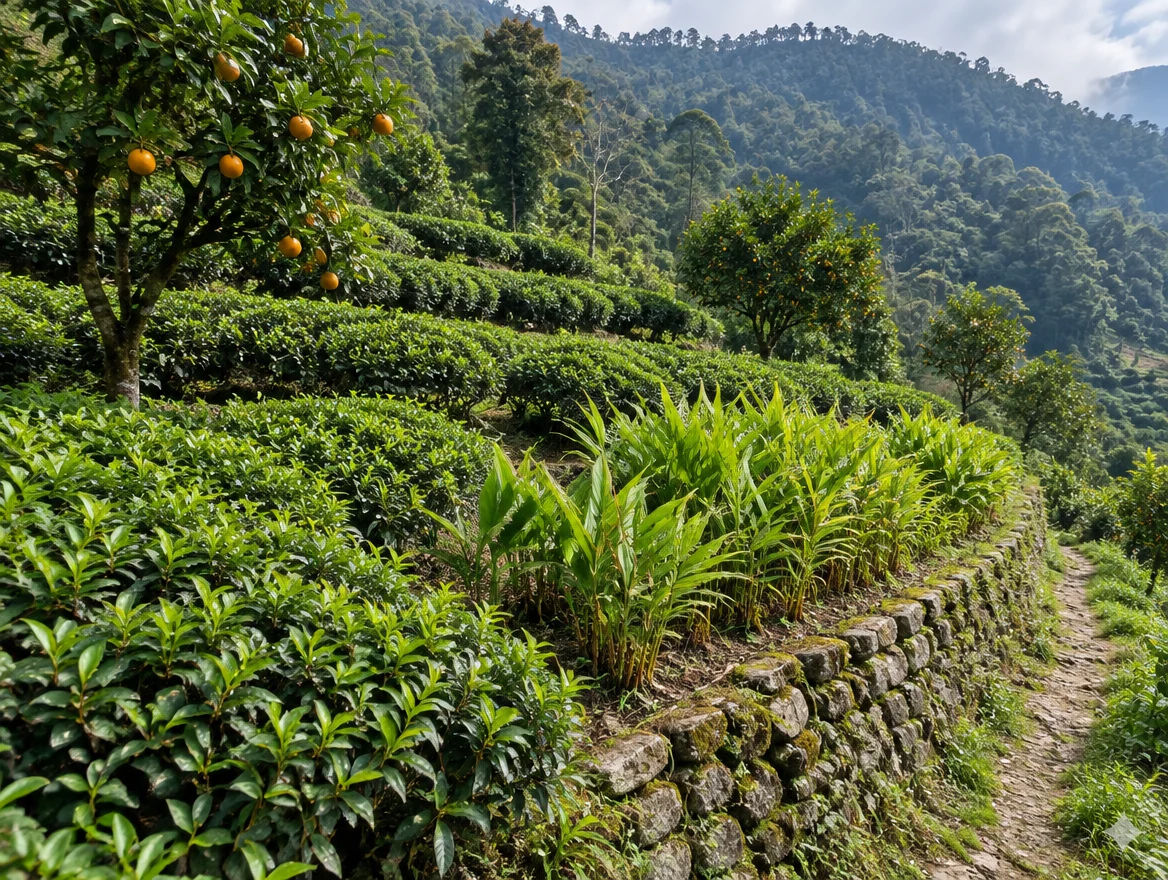
Tea, ginger and terrace farming.
Land and water
Sikkim’s groundwater extraction was 5.85% in 2024 and all 40 assessment units were Safe, nine of them in Namchi (CGWB, 2024[4]). CGWB lists normal pre-monsoon rainfall of 1,674.2 mm and post-monsoon 529.3 mm for the district.
- Groundwater extraction: 5.85% (state, 2024)
- Nine assessment units, all Safe
- Normal pre-monsoon rain 1,674.2 mm; post-monsoon 529.3 mm
Typical crops
Temi Tea Estate is the named crop story, with a GI certificate suggested by the visiting minister. None is given.
Slope and water
Terraced plots need a retaining wall and a spring or pipe supply. Visit in the rains.
At a glance
Namchi vs. nearby districts
| District | Land and water | What links it to Namchi |
|---|---|---|
| Gyalshing | North-west | Hill district whose portal names Namchi on its eastern boundary |
| Gangtok | North-east | Capital district with the NH-10 upgrade |
| Pakyong | East | Rail and airport district |
The neighbours are listed from our locator map and the Gyalshing portal, not from a boundary notification. No official farmland price series is published for Namchi. Ask the sub-registrar for recent registered sale values in the village you are looking at.
Farmland India view
Why investors look at Namchi
Five reasoned points for Namchi, each tied to a source on this page.
Tea and tourism
Temi tea and the Bhaleydhunga skywalk are the visible drivers, but no price series exists, so returns are a guess.
Eligibility first
Only Sikkimese buyers can generally register; Bhutia and Lepcha land needs sanction to leave the community.
Four subdivision offices
Namchi, Jorethang, Ravangla and Yangang each hold records; match the plot to the right office.
Projects are not dated
The skywalk and the circuit have no completion dates; do not price land on them.
Confirm the parcha, khazana receipt, mutation, zoning and acquisition status directly — these are not certified by Farmland India’s review.
STRAIGHT TALK
Risks & challenges in Namchi
District-specific risks. Read the Sikkim state page for the general risks on ceiling, conversion and records.
Ineligible buyer
A buyer without a COI cannot complete registration under the procedure.
Bhutia–Lepcha land
A sale outside the community without sanction conflicts with Revenue Order No. 1 of 1917, as upheld in April 2026.
Old district name
Records dated before 2021 may say South Sikkim; confirm the current district.
Landslide and slope
Steep terraced plots can slip in the monsoon.
Tourism hype
Projected visitor demand has no confirmed dates; treat agent claims as claims.
Objection window
Notices go to family, panchayat and banks, and any objection can delay registration.
Who to contact
Local revenue & planning offices
Start with the Collector’s office at Namchi and the Sub-Registrar (SDM) of the subdivision, who register sale deeds and issue notices. Use the state’s online registration application on the Land Revenue and Disaster Management Department portal, and ask for a written fee and duty computation.
COMMON QUESTIONS
Frequently asked questions
Everything buyers, NRIs and investors ask before their first reviewed farmland purchase in Namchi.
Visit full wiki01 of 04
Can an outsider buy land in Namchi or Ravangla?
In general, no. Sikkim keeps in force the laws that applied before 1975 under Article 371F(k), and registration documents include the buyer’s Certificate of Identification. Some exceptions for designated areas or industrial units have been reported; confirm any with the District Collector and a Sikkim lawyer.
02 of 04
Is Namchi the same as South Sikkim?
Yes. The district was renamed Namchi in the December 2021 reorganisation, with Namchi, Jorethang, Ravangla and Yangang subdivisions. Records dated before then may say South Sikkim.
03 of 04
What is the Bhaleydhunga skywalk?
A Rs 220 crore project under the PM-DevINE scheme, reported in May 2026 as under implementation, with a planned 240 metre circular glass skywalk at 3,200 metres. A 3.5 km ropeway reaches the site.
04 of 04
What does registration cost?
The SDM Mangan procedure page gives a registration fee of 4% and stamp duty of 1% of the consideration, paid by the seller. Ask the Sub-Registrar for a written computation.
Transparency
Sources and references
Law and courts
Government
- [2]SDM Mangan: sale-deed registration — mangan.nic.in
- [3]Sikkim land registration portal — registry.sikkim.gov.in
- [4]CGWB: Ground Water Resources of Sikkim, 2024 — cgwb.gov.in
- [5]Namchi district portal — namchi.nic.in
News
- [6]India Today NE: Sikkim gets two new districts, 22 Dec 2021 — indiatodayne.in
- [7]The Quint: states where outsiders cannot buy land, 29 Oct 2020 — thequint.com
- [8]IBG News via Dailyhunt: Union minister reviews Namchi projects, May 2026 — m.dailyhunt.in
- [9]indiatodayne.in: India Today NE — indiatodayne.in
- [10]theprint.in: ThePrint, Mar 2026 — theprint.in
Project status, the benchmark valuation and land rules change often; check the linked source and the relevant office before relying on any figure.
For developers
Ready to explore Namchi farmland?
Browse reviewed projects and individual land parcels across Namchi — or if you own land here, list it with platform review and reach serious buyers.