Khasra Khatauni UP: How to Check and Read It Online (2026 Guide)
Search by khasra, khata or owner name on UP Bhulekh and learn to read every column before you buy agricultural land.
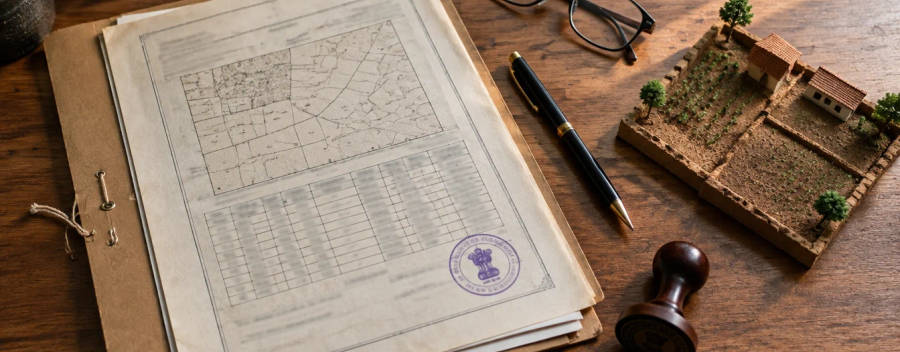
The khasra (खसरा) is the plot register and the khatauni (खतौनी) is the record of who holds the plot and in what share. Both are on UP Bhulekh. This guide shows the search and then reads a record line by line so you know what to accept and what to question.
Khasra vs khatauni in Uttar Pradesh
| Term | What it records | Use it for |
|---|---|---|
| Khasra / Gata (खसरा / गाटा) | Plot number, area, land type, crop and tenure details | Identifying the exact plot |
| Khatauni (खतौनी) | Holder, share, area held by each khatedar, tenure class | Confirming ownership and shares |
| Khata number (खाता संख्या) | The account grouping all plots of one holder in a village | Finding every plot of an owner |
Step-by-step: search by khasra or gata number
- Open UP Bhulekh (no login is needed for viewing).
- Choose the Record of Rights (Khatauni) option.
- Select District, then Tehsil, then Village.
- Choose Khasra/Gata number as the search method, the most precise option.
- Enter the number and search, then open the matching record.
- Download or print the extract if needed.
If you do not know the number, search by khata number or by the owner name. Owner-name search can fail on common names or spelling variants. If so, use the village code search or the khasra number.
How to read the record
- Khatedar name and father/husband name: must match the seller documents exactly.
- Share (अंश): a plot held jointly needs every co-holder to sign the sale deed.
- Area: compare with the sale deed and the map.
- Tenure class: some classes carry transfer limits. If it is unclear, ask a local revenue lawyer before paying.
- Remarks column: look for mortgage, litigation or government-claim entries.
Always cross-check three documents
Match the khatauni to the sale deed chain and to the village map on UP Bhu Naksha. A seller whose name is on the khatauni but not on the deed chain still needs a mutation (दाखिल खारिज) check. See Dakhil Kharij Status UP.
When the record is wrong or outdated
File a correction or mutation request at the tehsil with the registered deed and ID. See correcting errors in online land records. Do not pay the seller in full until the record shows the right name.
The five ways to search on UP Bhulekh
After you choose District, Tehsil and Village, the khatauni page shows five search tabs. A selector for the current khatauni or an earlier fasli year (फसली वर्ष) sits beside the village field.
| Search tab | Use it when |
|---|---|
| Khasra / gata number | You have the plot number from the deed. Most precise. |
| Khata number | You know the account of the holder and want all plots under it |
| Khatedar name (खातेदार) | You only have the owner name. Can miss spelling variants. |
| Land category (भूमि श्रेणी) | You want to see plots by their recorded land type |
| Mutation date (नामांतरण दिनांक) | You want to see entries changed on a date, for example after a sale |
The mutation-date search is useful after a purchase. It lets you see whether your name was entered on the date you expect. See Dakhil Kharij Status UP.
Other checks the same portal offers
- Status of a plot as sold (विक्रय) by gata number.
- Status of a plot as under litigation (वाद ग्रस्त) by gata number.
- Search for government land (सरकारी भूमि).
- A complaint and complaint-status service run by the Revenue Council.
Run the litigation and sale checks for every plot you plan to buy. They take a few minutes and can save you from a plot with a pending revenue case or a recent sale to someone else.
Buyer checklist
- Search the plot by khasra or gata number, not only by owner name.
- Print the extract and mark the holder, share and area.
- Compare it with the seller's deed chain and ID.
- Run an encumbrance check. See IGRS UP Encumbrance Certificate.
- View the plot on the village map.
- Visit the tehsil if anything does not match.
Common mistakes
- Reading only the first line of a joint-holding record and missing a co-holder.
- Accepting a seller's old printout instead of searching again.
- Ignoring the remarks column.
- Paying a large advance before the record is checked.