"Agricultural Zone" in a Master Plan: What Is Permitted (2026)
What an agricultural zone means on a master plan, which laws sit above it, and how to find what you can build on your plot.
A green or "agricultural" colour on a master plan is a planning label, not a permission to build. What you can build depends on the plan's zoning regulations, state planning law and any environmental overlay. This guide shows how to read the table and what to ask the authority.
What an agricultural zone means on a master plan
When a master plan or development plan colours an area "agricultural", it is making a planning decision: the plan does not intend that land for urban development. That is different from the word "agricultural" in the revenue record, which describes how the land is classified for land revenue and ownership. Our guide to master plan land use versus actual use explains why the two can disagree, and land-use zones explained lists the usual zone names.
The question buyers really ask is "what can I build?" We are going to be plain: there is no single national answer. Permitted uses in an agricultural zone are written into each plan's zoning regulations or into state rules, and they differ by state and often by authority. This page shows how to find the answer for your plot and what we could and could not confirm.
Two layers decide what you can build
- The plan's zone. The development plan or master plan places your land in a zone. The zone's permitted-use table says what is allowed as of right, what needs permission and what is barred.
- The state's land and planning laws. Separate laws regulate building, change of land use and sale of plots. Even a use that the zone allows may need a permission, a CLU or a building plan approval.
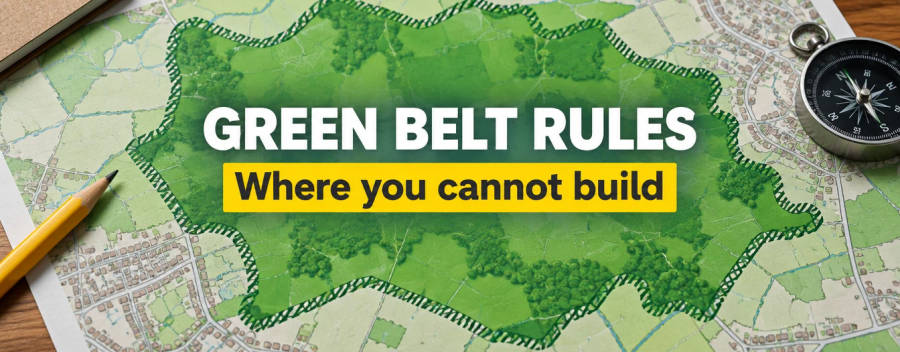
A third layer sits over both: environmental and forest law, such as Aravalli, floodplain and eco-sensitive zone limits, which can bar building on land the plan zones as agricultural. See our guides on Aravalli and green belt limits and eco-sensitive zones.
State by state: what we could confirm
| State or area | What we read | What we could not confirm |
|---|---|---|
| Haryana (controlled areas) | Section 6 of the 1963 Act needs the Director's prior permission to build in a controlled area, with a proviso for buildings used for agriculture or subservient to it. Section 7(1) needs permission for change of land use. See controlled area vs urbanisable area. | The permitted-use table for the agricultural zone of a given plan. The Gurugram-Manesar plan marks an agricultural zone but the hectares and permitted uses were not in what we could read. |
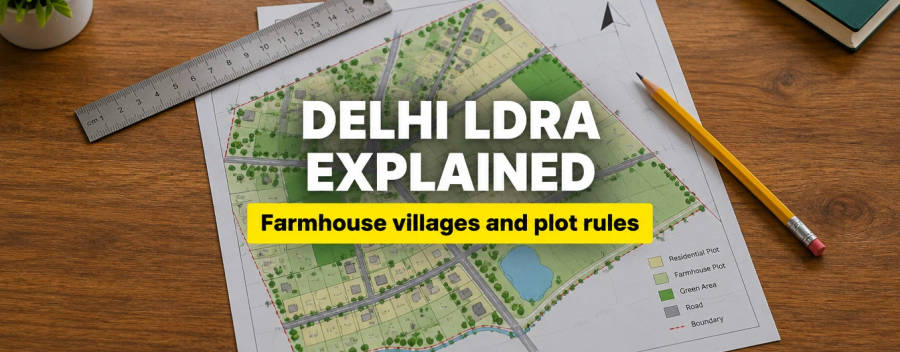
| Delhi | Under the Delhi Development Act, 1957 (library), section 12 requires written permission for development, section 14 bars use in contravention of the plans, and section 11A lets the DDA modify the master plan. Farmhouse and low-density residential policy entered by notification. | The Master Plan for Delhi 2041 was approved by the DDA in February 2023 but, per our library, never notified; the DDA approved a 2047 plan on 12 August 2026 and it is with the Ministry. Treat any 2041 or 2047 provision as draft. |
| Himachal Pradesh | Under the HP Town and Country Planning Act, 1977 (library), section 16 bars change of use or development after the existing-land-use map without the Director's written permission; the library notes agriculture cannot be refused. | Which planning areas are notified near your village. |
| Uttarakhand | The Uttarakhand Urban and Country Planning and Development Act, 1973, as amended by Act 8 of 2025, covers development areas, master plans and permission from the vice chairman; the 2025 amendment adds land pooling and influence areas up to 500 metres. | Permitted uses in an agricultural zone for any particular plan. |
| Uttar Pradesh, Rajasthan, Punjab | Each has its own planning law and authorities; see development authorities in North India. | We did not read their zoning regulations for this page. |
What is usually, but not always, allowed
Plans commonly allow, in an agricultural zone, farming and activities connected with it: farm sheds, storage of produce, a farmer's dwelling, dairy, poultry or orchards. Our Haryana source defines agriculture in the 1963 Act to include horticulture, dairy farming, poultry farming and orchards. Some states also allow a limited farmhouse or low-density residential use under a named policy, usually with a minimum plot size, a cap on built-up area and a CLU. These are patterns, not rules. Which of them applies to you depends on the plan, and we did not find a single official table that covers all the plans we track.
Things that are rarely allowed as of right in an agricultural zone: plotted layouts, commercial buildings, resorts, banquet halls, warehouses and industry. Some can be allowed with a change of land use or a special policy. Read our page on resorts on agricultural land and on whether you can build a farmhouse without CLU.
How to read the zoning table
- Find the plan's edition and notification date. Say whether it is draft, final or notified. A draft has no legal force.
- Find your village or sector on the zoning sheet and match your khasra. Our page on how to read a master plan helps.
- Read the zoning regulations for the "agricultural" or "rural" zone. Look at three columns: uses permitted, uses permitted with permission, and uses prohibited.
- Note limits on plot size, ground coverage, floor area ratio and height. Ask whether they are in the plan or in a separate policy.
- Ask which authority gives permission and under which Act: development authority, town planning department or panchayat.
- Ask for the answer in writing, on the authority's letterhead.
Traps around the word "agricultural"
- "Agricultural zone, so I can build a farmhouse." Not necessarily. The zone says what the plan intends; a farmhouse usually needs a specific permission.
- "Not in the urban zone, so no rules." State planning laws apply outside urban zones too.
- "The dealer's map shows a green plot." Third-party maps are not the notified sheet. Ask the authority.
- "The plot is agricultural in the record, so it is agricultural in the plan." The two can differ. See change of land use in India.
- "Others have built there." Neighbouring structures may be unauthorised. In the NCR, some farmhouses on Aravalli land were demolished in 2025, reported in the press.
Ask four questions before a token amount
Four questions for the authority
Which zone is my khasra in? Is this plan notified or draft? What does the zoning regulation allow in that zone, and what needs permission? Is any acquisition, forest, floodplain or eco-sensitive overlay on the plot?
Frequently Asked Questions
What does agricultural zone mean in a master plan?
Is agricultural zone the same as agricultural land in the record?
Can I build a house in an agricultural zone?
Can I build a farmhouse in an agricultural zone?
Do I need CLU in an agricultural zone?
Can I run a resort or banquet hall there?
Is a draft master plan binding?
What if my land is in the agricultural zone and also in the Aravalli or floodplain?
Where can I get the zoning plan?
Can I rely on this page for my plot?
Sources
- Punjab Scheduled Roads and Controlled Areas Restriction of Unregulated Development Act, 1963, Haryana text (PRS)
- HP Town and Country Planning Act, 1977, as amended to 2018 (HP TCP Department)
- Uttarakhand Urban and Country Planning and Development (Amendment) Act 8 of 2025 (PRS)
- Business Today: Delhi Master Plan 2047 gets DDA nod (13 Aug 2026)