LDRA in Delhi: the Farmhouse Zone of MPD-2041 Explained (2026)
What a Low Density Residential Area is in Delhi, how the 2013 notification and the reported MPD-2047 rules apply, and how to check a village.
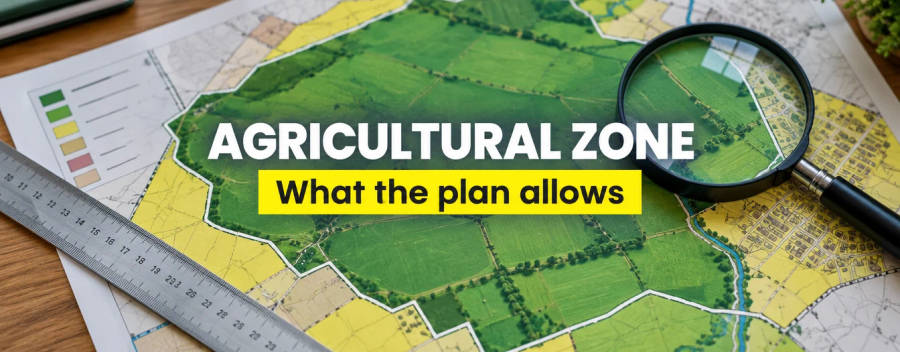
An LDRA (Low Density Residential Area, kam ghanatva awasiya kshetra, कम घनत्व आवासीय क्षेत्र) is the Delhi planning status behind the farmhouse villages. It attaches to notified villages, not to all agricultural land. This guide explains the legal route, what changed between MPD-2021, the 2041 draft and the reported MPD-2047, and how to check a plot.
What an LDRA is
LDRA stands for Low Density Residential Area. In Delhi it is the planning label that sits behind the "farmhouse belt" in villages such as those in the south and south-west of the capital. It is not a separate zone created by a developer and it is not a general permission to build a farmhouse on any agricultural plot. It is a status given to specific villages, and the plot rules that go with it come from the master plan and from notifications under the Delhi Development Act, 1957.
Our legal library records the key instrument: a Ministry of Urban Development notification, S.O. 1744(E) dated 18 June 2013, which modified the Master Plan for Delhi and declared LDRAs. Orders of the Financial Commissioner, Delhi, dated 15 December 2023, refer to that notification and say, in relation to Dhansa, that "Low Density Residential Plots are permitted in Green Belt of Dhansa". We opened that order's citation through our library; we did not fetch the 2013 notification itself, so the plot-size and floor-area numbers set by it are not reproduced here.
The "MPD-2041" in the title is a draft that became MPD-2047
The Master Plan for Delhi 2041 was a June 2021 draft and was never notified. The plan reported in force is the Master Plan for Delhi-2047, reported notified on 20 August 2026. We could not open the gazette. See our Delhi master plan page.
How the law works: section 11A
Under the Delhi Development Act, 1957, section 7 requires the DDA to prepare a master plan, section 8 provides zonal development plans, and section 11A allows the DDA to make modifications to the master plan or a zonal plan "as it thinks fit". The 2013 LDRA notification is an example of a section 11A modification. Sections 12 and 14 require written permission for development and prohibit use contrary to the plans, and sections 29 and 30 provide penalties and demolition. The text we read is a mirror copy of the Act.
The consequence for a buyer is simple. Whether farmhouse-style use is allowed depends on three separate things: the village must be in the LDRA list; the plot must meet the size and road conditions of the notification or the plan in force; and the structure must be sanctioned. Being in a village with farmhouses on it proves none of these.
LDRA under MPD-2021
The Master Plan for Delhi-2021 was notified on 7 February 2007 as S.O. 141(E). In a reprint of the plan (marked "for reference only"), Chapter 4 paragraph 4.2.2.2 D deals with low-density residential areas in villages where farmhouse clusters already existed, and Chapter 3 paragraph 3.2 says new farmhouses and motels are not permitted in the proposed urban extension. These paragraph numbers come from our research dossier's reading of the reprint, not from a gazette copy we opened.
The practical rule drawn from this: farmhouse rights in Delhi under MPD-2021 attach to villages notified as LDRA, not to the whole agricultural belt. A buyer in a village outside the LDRA list, or in the urban extension, should not assume farmhouse use.
The Green Development Area proposal
In February 2021 the DDA issued a public notice of a proposed policy for Green Development Areas with objections invited for 45 days. The notice, dated 24 February 2021, proposed grades of 600 sq m, 4,000 sq m (farmhouses) and 10,000 sq m, and described the policy as not yet notified. Reports say the DDA's draft approved on 12 August 2026 carried a similar grade structure, and that the final plan dropped the policy. We could not confirm that from the gazette. If you see a brochure promising a "4,000 sq m farmhouse plot under GDA", ask for the notification.
What is reported for MPD-2047
Business Standard and other outlets reported after 20 August 2026 that the notified plan sets a minimum plot of 10,000 sq m (about 2.5 acres) and an abutting road of 18 m for low-density areas, with a 45 m master trunk road right-of-way, and that smaller plots keep the floor-area ratio of a 2.5-acre plot. A private advisory site lists additional ratios, including a floor-area ratio, coverage and height, but it contradicts itself and we do not reproduce them. The low density areas are reported to cover about 150 sq km and the list of villages is reported to be an annexure to the plan. A private site says 70 villages; we could not confirm this.
All of this is labelled "reported". Until the gazette is read, the only safe statements are that the rules are reported to have changed from the draft and that you should read the gazette clause and the annexure list for your village.
Existing farmhouses and regularisation
No order we found says that all existing farmhouses in Delhi are illegal or that the master plan makes them legal. Their position turns on sanction, regularisation policy and enforcement. A press headline in October 2026 called them illegal while its body text said otherwise. For a buyer of an existing farmhouse, ask for the sanction letter, completion or occupancy proof and any enforcement notice. Also see farmhouse rules in India, farmhouse construction norms and building a farmhouse without a CLU.
How to check whether a Delhi plot is in an LDRA
- Get the village and khasra from the record at Bhulekh Delhi; the khatauni page is here.
- Check the village against the LDRA list in the 2013 notification and, for the new plan, the annexure. Ask DDA for the current list in writing.
- Check plot area and abutting road width against the rule applicable on the date you apply.
- Check the Yamuna O-zone, Ridge and forest overlays. A press report says no concrete structures would be allowed in the core Yamuna floodplain.
- Check land pooling. DDA lists 104 villages notified as a Development Area.
- Check lal dora. See lal dora and abadi land.
- Ask DDA for the zoning position in writing and keep it. See land use certificates by state.
Compare with the minimum land for a farmhouse in other states at this page. We make no price or return claim.
What is unconfirmed
We could not confirm: the contents of S.O. 1744(E) (plot size and floor-area figures); the MPD-2047 gazette text on LDRA; whether the Green Development Area policy was formally dropped; the number and names of LDRA villages in the current annexure; and the position on lal dora land in MPD-2047. This page stays a draft until those are read.
Frequently Asked Questions
What does LDRA mean?
Which notification declared LDRAs?
Is the 2041 master plan the source of LDRA rules?
What is the reported minimum plot size now?
Does owning land in a farmhouse village make my use legal?
What was the Green Development Area policy?
Can new farmhouses be built in the urban extension?
Are existing farmhouses illegal?
Where do I find the LDRA village list?
Is a Dhansa plot in the green belt allowed for low density use?
Sources
- Office of the Financial Commissioner, Delhi: order dated 15 December 2023
- Delhi Development Act, 1957 (mirror copy of the Act text)
- DDA public notice on the Green Development Area policy (24 February 2021)
- Business Standard: Delhi Master Plan 2047 (20 August 2026)
- DDA: Land pooling (read via project dossier)