MCD Property Tax Delhi: Check and Pay (2026)
What the MCD portal shows for property tax, what the new calculator reportedly asks for, and what a land buyer should verify before paying.
Property tax in Delhi is collected by the Municipal Corporation of Delhi. If you are buying a farmhouse, built-up plot or any asset the MCD assesses, unpaid dues and wrong area entries can become your problem. This guide covers what we could confirm on the official portal and the checks to run before you pay.
What MCD property tax is
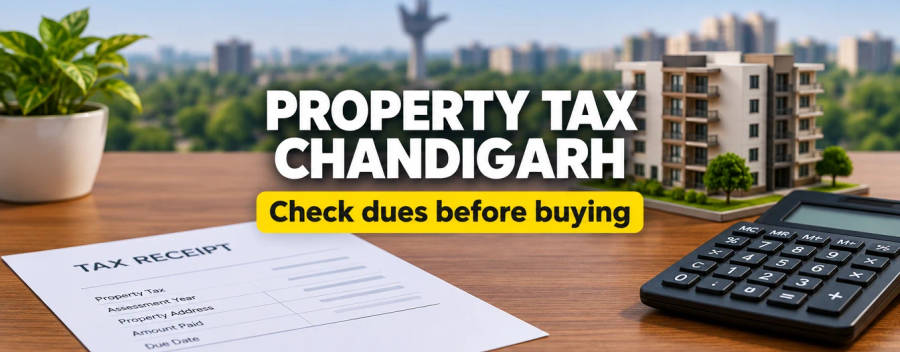
Property tax in Delhi is a municipal tax collected by the Municipal Corporation of Delhi (MCD) on built-up and some other categories of immovable assets inside its area. We use the government term "property tax" here, although our own pages say "land". For a land buyer the point is simple: tax dues attach to the asset, and unpaid dues can become your problem after purchase. Compare the same topic for other states in UP, Haryana and Punjab.
Pure agricultural land in a Delhi village may not carry property tax in the same way as a built-up plot or farmhouse. We could not confirm on an official source how MCD treats farmland, farmhouses or vacant land, so ask the MCD zone office before you assume either way.
The official MCD portal
The MCD portal at mcdonline.nic.in/portal shows Pay Property Tax in its top navigation. The page we opened also listed an office order for a One Time Property Tax Amnesty Scheme 2026-27 (SUNIYO 2.0) and an Unauthorised Property Details item. We did not see self-assessment, unit area method or login options named on that page, so we cannot describe those screens from the portal itself.
We could not open the details of the amnesty office order, so we do not state its terms, dates or eligibility. A PTI report of September 2025 said an earlier Suniyo scheme (Sampatti Kar Niptan Yojana) ran until September 30 that year. Treat any amnesty as time-limited and read the current order on the portal.
The MCD tax calculator and what it asks for
A PTI report dated 15 September 2025 said MCD launched a property tax calculator on its website, under the property tax section, so citizens can estimate annual tax without an app or intermediary. According to that report the tool asks for:
- Covered area in square metres
- Year of construction
- Nature of use
- Type of construction
- Whether the property is self-occupied or rented out
It then shows the liability and offers a PDF of the calculation to use when paying. We read this from a news report, not from the calculator itself, and we could not confirm the current layout. We also could not confirm the tax rates, the colony categories or the formula behind the unit area basis, so we state none here.
Treat a calculator figure as an estimate
Ask the seller for the latest paid tax receipt and the assessment reference. Compare it with what the calculator suggests. A large gap can mean past under-assessment, which a buyer should clear before paying.
How a buyer should check property tax, step by step
- Ask the seller for the property tax identification or reference number and the last paid receipt.
- Open the MCD portal and use Pay Property Tax to look for the asset by the details it asks for. We could not confirm the exact search fields.
- Note any arrears, the years they cover and any interest or penalty shown.
- Compare the covered area and use type on the record with what is built on site.
- If the record and the site differ, ask for correction before purchase, not after.
- Agree in writing who pays the arrears up to the date of sale.
If the land is vacant or farmland and no assessment is shown, get a written statement from the MCD zone office rather than assuming no tax applies.
Why tax records matter in land due diligence
A tax receipt is not a title document. It does not prove ownership, and paying tax does not regularise an unauthorised structure. Even so, it is useful evidence of who the municipality treats as the person responsible, of the area and use it has on file, and of whether dues are clear. Read it with the revenue record and map: Bhulekh Delhi, Bhu Naksha Delhi, khatauni in Delhi and mutation status in Delhi.
For a farmhouse purchase, check that the structure has the permissions that your lawyer says it needs. The portal lists an Unauthorised Property Details item, which hints that MCD publishes some information on unauthorised assets, but we could not confirm what it covers or whether it is searchable by plot. Our due diligence checklist and title verification guide show where tax checks fit.
Mutation and tax after you buy
After purchase, get the municipal record changed to your name as well as the revenue record. We could not confirm the MCD procedure, form or fee for changing the name on a tax assessment, so ask the zone office for the written list of documents. The registered sale deed, your identity proof and the last tax receipt are usual starting points, but confirm before you apply. For the revenue side, see the mutation guide and mutation status in Delhi.
Keep copies of every receipt. If the seller has an amnesty benefit pending, ask whether it transfers to you. We could not confirm this either way.
What is unconfirmed
We could not confirm on an official page: the tax rates and categories, the unit area method formula, the self-assessment form, the login requirement, the amnesty terms for 2026-27, the due dates, rebates for early payment, interest rates on arrears, and the treatment of agricultural land or farmhouses. This page is therefore a draft. It explains how to check and what to ask, and it avoids stating numbers we have not seen on an MCD page.
Red flags for a buyer
- The seller cannot produce any tax receipt for built-up land.
- The covered area on the receipt is far below what is built.
- Arrears are shown for several years.
- The assessed owner is a different person from the seller.
- The seller asks you to pay the tax in cash to a third party.
Any one of these is a reason to pause and ask your lawyer. None is proof of a problem, but each is cheaper to resolve before payment than after.