
District guide
Buying Land in Kishanganj
Land in Kishanganj, Bihar: tea belt, border district, expressway acquisition and June 2026 MVR rules explained for buyers.
About 1,884 sq km
Area (district site)
About 2,141 mm
Normal annual rainfall
52 under acquisition
Expressway mouzas
24.70 acres sanctioned
Airport land
District land record — Kishanganj
Rev. 2026 · Farmland India desk
State
Bihar
Blocks
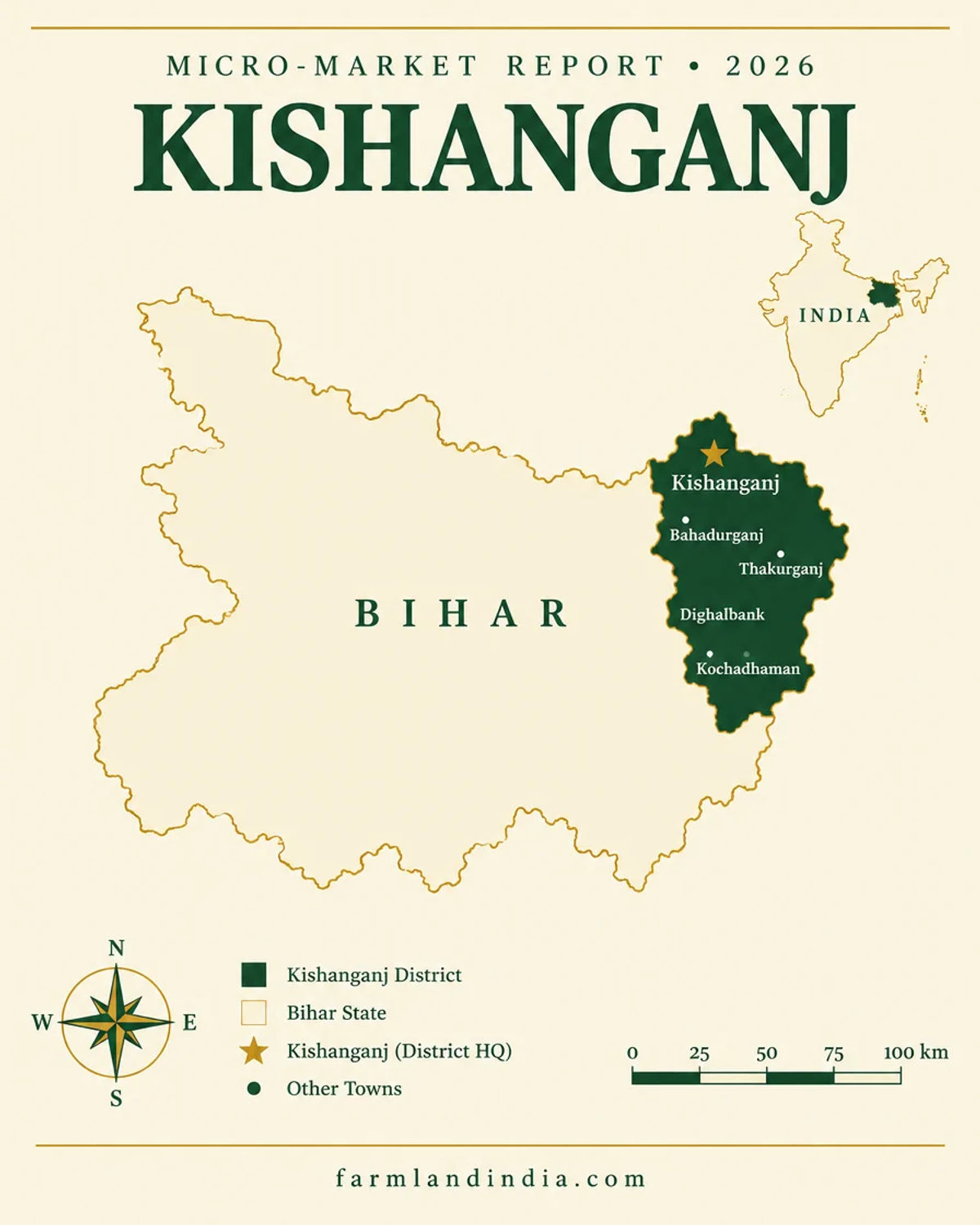
Seven blocks, including Kishanganj, Bahadurganj, Dighalbank, Pothia, Terhagachh, Thakurganj and Kochadhaman
Key markets
Kishanganj town · Thakurganj · Bahadurganj · Pothia · Dighalbank · Bhogdabar
Demand anchors
Gorakhpur–Siliguri Expressway land acquisition · Kishanganj airport runway land funds · Tea belt · Border trade and the Siliguri gateway
Rail
Kishanganj station on the Northeast Frontier Railway, with Rajdhani Express stops on the New Delhi–Guwahati route (district site)
Size and population
About 1,884 sq km (district site) and about 16.9 lakh people at the 2011 Census (Census of India)
Pricing unit
Asking prices are usually quoted per kattha or decimal; no sourced price series is shown
Local units
Kattha (कट्ठा), bigha (बीघा) and decimal (डिसमिल) are used in deeds and talk; this page converts to acres and sq yd only where a source does
Land law is state law. These rules are maintained on the Bihar page and apply to every district within it.
Kishanganj — land purchase legal rules
Bihar does not reserve agricultural land for farmers the way Gujarat or Maharashtra do, so an Indian resident who is not a cultivator can usually buy farmland here. The limits that bite are different: a family land ceiling, a conversion permission before any non-farm use, an unfinished statewide resurvey that is rewriting old records, and the usual NRI bar under FEMA. Most buyer problems in Bihar come from the records, not from the law.
Who can buy agricultural land? We found no provision in Bihar’s tenancy or ceiling laws that limits farmland purchases to agriculturists. What the Bihar Land Reforms (Fixation of Ceiling Area and Acquisition of Surplus Land) Act, 1961 controls is how much a family may hold, and section 16 bars any acquisition by transfer, exchange, lease, mortgage or settlement that would take the buyer’s family above its ceiling. Inheritance, bequest and gift are outside that bar.
Ceiling limits: Section 4 of the 1961 Act sets the ceiling for a family of up to five by land class: 15 acres for land irrigated by government works and double-cropped, 18 acres for land on private tubewells or lift irrigation, 25 acres for one-season irrigated land, 30 acres for other land including orchards, 37.5 acres for diara or chaur land and 45 acres for hilly, sandy or perennially submerged land. Each extra family member adds one-tenth of the ceiling, up to one and a half times the limit. A “family” is a person, spouse and minor children, and companies, trusts and institutions count as persons.
Conversion to non-farm use: The Bihar Agriculture Land (Conversion for Non-Agriculture Purposes) Act, 2010 requires prior permission from the Sub-Divisional Officer before agricultural land is used for anything else. The fee is 10% of market value as set by the Collector under the Stamp Act, the SDO must decide within 90 days, and converting without permission draws a penalty of half the fee on top of the fee. The Act does not apply inside municipal areas or areas notified as urban, commercial or industrial through a master plan, where building and layout rules take over instead.
Mutation and the Jamabandi: A registered deed is not the end of the job. The buyer has to apply for mutation, called Dakhil Kharij, so that the Jamabandi (register II) moves to the buyer’s name and rent receipts are issued to the buyer. Both steps run online through Bihar Bhumi, and errors in the digitised Jamabandi are corrected through the Parimarjan portal. Sellers whose Jamabandi carries a wrong name, area or plot number should fix it before registry, not after.
The special land survey: Bihar is resurveying land under the Bihar Special Survey and Settlement Act, 2011, which will produce a new Khatiyan (record of rights) and maps for each village. The deadline was moved to December 2026 in March 2025 (PTI via ThePrint), and the revenue minister was reported in March 2026 to have set December 2027 for completion (Prabhat Khabar, March 2026). Buyers in a village under survey should check whether the seller filed the self-declaration and whether any claim or objection is pending on the plot.
Government, Bhoodan and estate land: A large share of disputes involves land that was never the seller’s to sell: government land recorded as gair mazarua, Bhoodan land, or land of former estates. The revenue department reported that 2,56,664.88 acres of the 6,48,593.14 acres donated under Bhoodan had been distributed, and that about 15,358 acres of the former Bettiah Raj estate were set to be taken over (Deccan Herald). Check the khata category in the Khatiyan before paying any token money.
Scheduled Areas and tribal land: Bihar is not among the ten states with notified Fifth Schedule Areas (PIB). The Chotanagpur and Santhal Parganas tenancy restrictions on tribal land went with those regions to Jharkhand in 2000, so buyers moving between the two states should not assume the same rules apply.
Planned township zones: Bihar has finalised areas for 11 greenfield satellite townships and in April 2026 the Urban Development Department barred sale, purchase and construction in seven of them, including the Pataliputra Township around Patna (Prabhat Khabar, April 2026). The ban on sales was lifted in August 2026, though a landowner inside the Pataliputra township area must first inform the government before selling, and a cabinet decision reported on 29 October 2026 removed the restriction in the satellite townships, with construction to follow the development control rules (Prabhat Khabar, 9 August 2026; Prabhat Khabar, 29 October 2026). Zoning under these plans now decides what a plot can be used for.
Documents to ask for: Before paying an advance, collect the current Jamabandi page and the latest rent receipt (lagan rasid), the Khatiyan (record of rights) from the last settled survey and, where it exists, the new survey entry, the Bhu Naksha map sheet with the plot number marked, the seller’s chain of registered deeds (kewala) for at least the last 30 years, the mutation order that put the land in the seller’s name, and a land possession certificate (LPC) from the circle office. Match the khata, khesra (plot) number, area and boundaries across every document. Our Bhu Naksha guide and mutation status guide show how to pull these online.
NRI and OCI buyers: Under the RBI’s Master Direction on acquisition of immovable property, NRIs and OCIs may buy immovable property in India other than agricultural land, plantation property or a farm house. They can inherit such land. Our NRI guide covers the options in detail.
- No farmer-only rule found
- Ceiling Act 1961
- Conversion Act 2010 (SDO)
- Dakhil Kharij mutation
- Special survey to 2027 (reported)
- NRI agri: barred (RBI)
- Records via Bihar Bhumi
Kishanganj — district-specific notes
The Bihar state page applies to Kishanganj in full: the ceiling law, the 2010 conversion rule, mutation through Bihar Bhumi and the NRI bar. These five points are specific to the district.
⚠ Kishanganj touches Nepal to the north, Darjeeling and Uttar Dinajpur districts of West Bengal to the north and east, and Purnia and Araria in Bihar (district site). A strip of West Bengal about 20 km wide separates it from Bangladesh. Because of this position, any land near the border road network can be of strategic interest, so ask the circle office whether a plot falls under any acquisition or restriction before you pay a token amount.
⚠ The Gorakhpur–Siliguri Expressway is the largest land question in the district. Prabhat Khabar reported on 18 June 2026 that the alignment had shifted to the east of Thakurganj, that acquisition had started in 52 mouzas (revenue villages), and that the district administration had stopped sale and registration of land in the affected mouzas (Prabhat Khabar, 18 June 2026). If a plot you are shown lies in one of those mouzas, you cannot register it and you should not pay.
⚠ The June 2026 minimum value register (MVR) revision applies here. The Thakurganj sub-registry office told Prabhat Khabar that rural MVR rose 1.6 times and urban and peripheral MVR doubled from 19 June 2026, with stamp duty at 7% in rural areas and 9% in urban areas (Prabhat Khabar, 19 June 2026). Read the stamp duty basics on the Bihar stamp duty guide and the MVR rate guide.
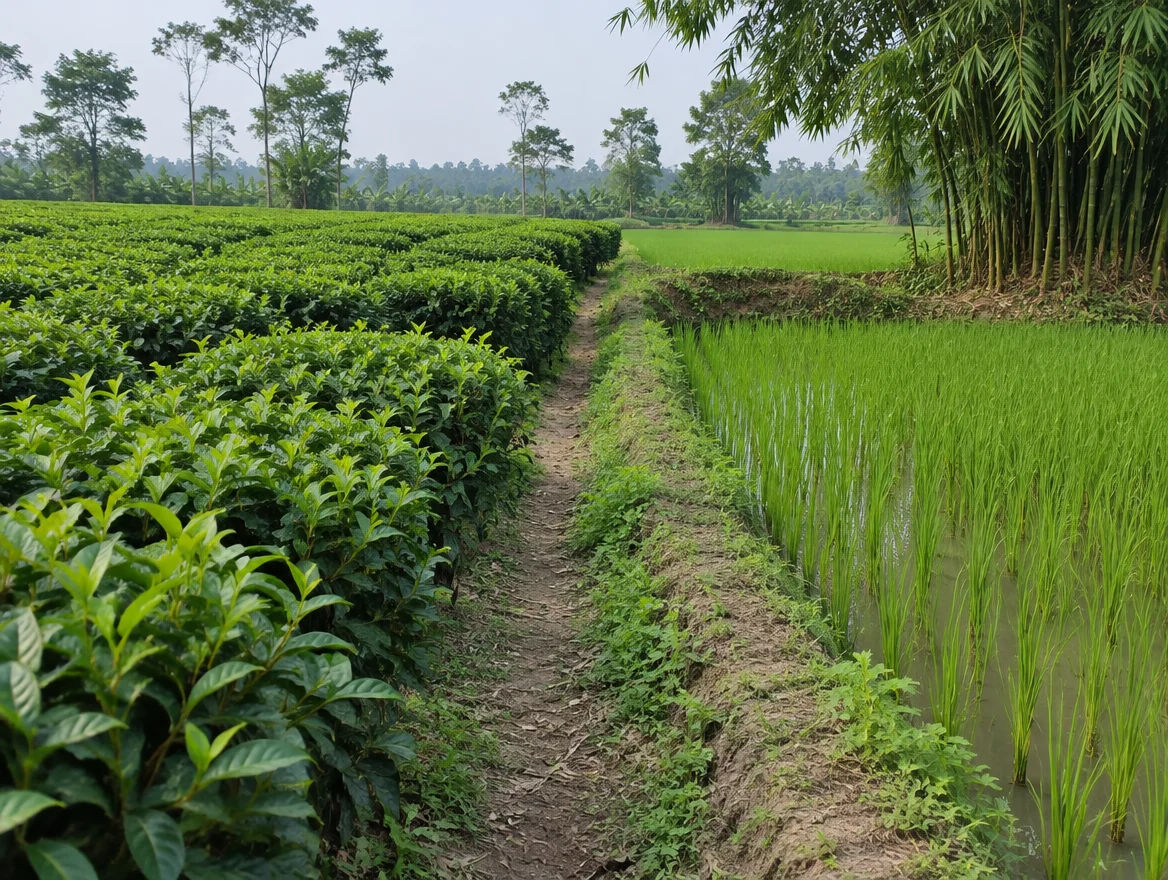
⚠ Four rivers drain the district: the Mahananda, Kankai, Mechi and Donk, along with smaller streams (district site). Fields near the channels carry flood and bank-cutting risk, while the higher interior land near the Kishanganj–Thakurganj road belt is drier. Land under tea needs separate care: check the Jamabandi entry for the land class and ask for the tea cultivation record before assuming the plot can be used for something else.
⚠ NRIs and OCIs cannot buy agricultural land in India under FEMA; they may buy non-agricultural land through a proper conversion or inherit. See Can NRIs buy agricultural land in India. Family offices and companies buying farm land in Bihar should read the state ceiling rules on the Bihar page before shortlisting plots.
Read the full Bihar land buying guide for the ceiling, conversion, survey and NRI rules.
- International border district
- Expressway acquisition zone
- Registration stopped in 52 mouzas
- MVR revised June 2026
- Tea land and flood plain
District overview
Kishanganj — a border, tea and rice district at the edge of the Siliguri gateway
Kishanganj is a small, densely settled district in the far north-east of Bihar, about 1,884 sq km, created on 14 January 1990 out of the old Purnea district (district site). It lies between Nepal and West Bengal, a short hop from Siliguri. The Census of India counted about 16.9 lakh people in 2011, and most of the land is under paddy, wheat, maize and, increasingly, tea.
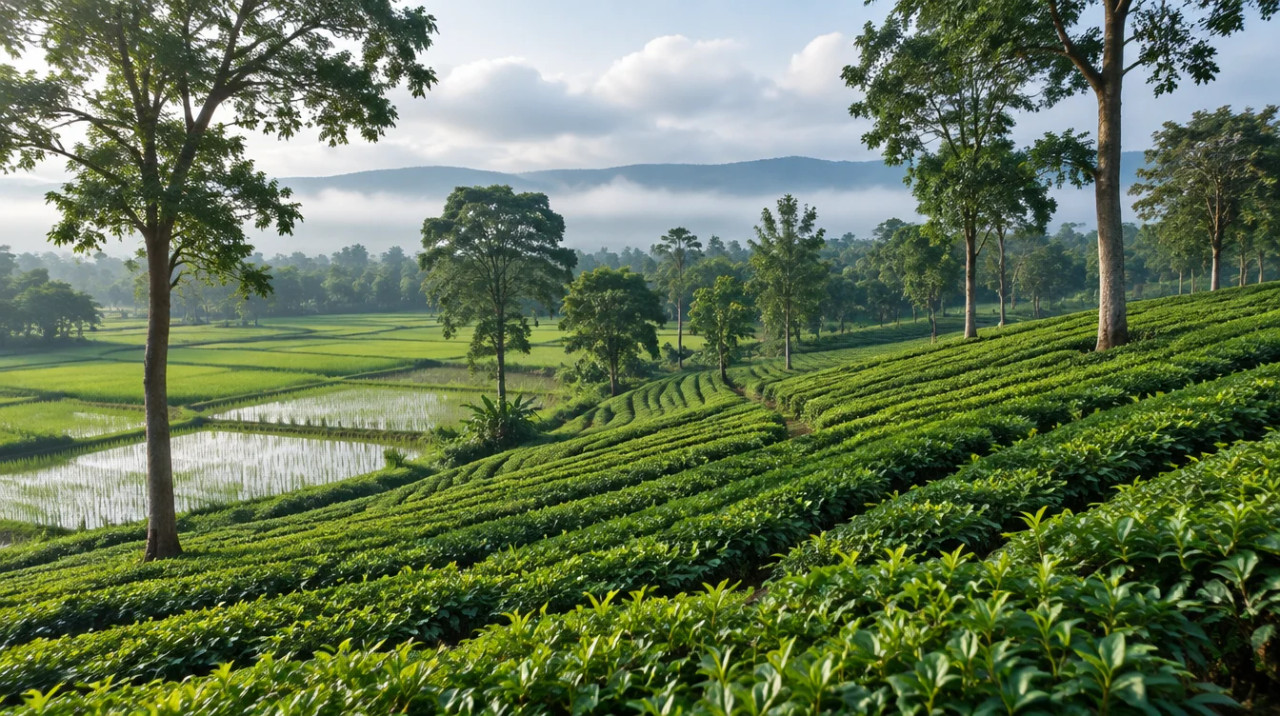
Kishanganj is Bihar’s only tea-growing district. The Indian Masterminds feature of December 2023 put the cultivable tea area at between 7,000 and 8,000 hectares and about 5,000 farmers directly involved, with the district administration aiming to double the area (Indian Masterminds, 8 December 2023). An earlier IANS report in June 2023 gave larger figures, about 50,000 acres and 12 processing units (IANS via The Hans India, 18 June 2023). The two sources do not agree on the area, so treat any tea-acreage claim from a seller with care.
Who buys here: local farming families expanding holdings, tea growers, traders from the Thakurganj and Bahadurganj border markets, and investors watching the expressway. Outside buyers are mostly from Bihar and West Bengal. The district’s position on the road and rail link between Siliguri and the rest of the Gangetic plain is the long-term reason people look at land here.
The land market follows three things: the expressway route and its interchange near Bhogdabar, the town of Kishanganj and its airport, and the tea belt in Pothia, Thakurganj and Bahadurganj. The sections below explain each, with the status of every project and the date of the source.
Before you pay for any plot, match the seller’s name to the Jamabandi (जमाबंदी), the latest rent receipt (lagan), the Khata and Khesra numbers and the Bhu-Naksha sheet, and confirm that mutation (दाखिल-खारिज) is complete at the circle office (anchal). Our guides cover the Bihar Bhumi Jamabandi lookup, the Bhu-Naksha plot map and mutation status.
- Tea belt
- Gorakhpur–Siliguri Expressway
- Kishanganj airport
- Mahananda basin
- Border district
- Rice and maize
Transaction costs
Stamp duty & registration in Kishanganj
7% · 9%
Stamp duty from 19 June 2026: rural · urban
up from 6% and 8%; reported by Prabhat Khabar
2x · 1.6x
MVR in urban and peripheral · rural areas
from 19 June 2026
+5% a year
Further MVR rise each financial year
full revision every three years
Kishanganj follows the state rates. Prabhat Khabar reported on 18 June 2026 that the MVR was raised from 19 June, doubling in urban and peripheral areas and rising 1.6 times in rural areas, with a further 5% rise each year and a full revision every three years (Prabhat Khabar, 18 June 2026). The Thakurganj sub-registry office gave the same multiples for Kishanganj on 19 June 2026, with stamp duty up from 6% to 7% in rural areas and from 8% to 9% in urban areas (Prabhat Khabar, 19 June 2026). In the 52 mouzas covered by the expressway acquisition, Prabhat Khabar also reported that a special MVR review for residential, developing and two-crop farm land had been completed to fix compensation, so government rates there can differ from the neighbouring villages (Prabhat Khabar, 18 June 2026). The registration fee was not restated in the 2026 reports, so confirm the current fee at the sub-registrar office.
Know the belt
What is moving prices in Kishanganj
Three pockets drive most enquiries. Their character, and what to check, are below.
Kishanganj town and the airport belt
District headquarters · NH-31 · rail · Khagra airport
Kishanganj town is the district’s administrative and trading centre, on NH-31 and the Northeast Frontier Railway. The airport is at Khagra, in the town area. Bihar’s civil aviation department sanctioned Rs 5.46 crore for 24.70 acres of land for runway extension, for use through FY 2026-27 (Prabhat Khabar, 24 May 2026). The June 2026 urban and peripheral MVR rule applies to land around the town. Demand is for small residential, storage and farm plots.
Check: whether the plot is inside the municipal or peripheral belt, whether it touches the airport acquisition, and waterlogging on low land.
Thakurganj and the expressway corridor
Thakurganj · Bhogdabar · 52 mouzas under acquisition
Thakurganj is the northern border market, and the revised Gorakhpur–Siliguri alignment passes to its east. Prabhat Khabar reported that the only connection with NH-327E in Kishanganj will be a proposed interchange near Bhogdabar, and that villages such as Barchaundi, Kharudah, Bholmara and Jiranganch could become corridor villages (Prabhat Khabar, 18 June 2026). Registration is stopped in the affected mouzas, so most live trades are in the villages just outside them.
Check: the mouza list in the acquisition notice, the plot’s distance from the alignment, and whether the seller has an acquisition notice pending on the parcel.
Pothia, Bahadurganj and Dighalbank tea and rice villages
Tea belt · paddy · maize
Tea is grown mainly in Kishanganj, Pothia, Thakurganj, Bahadurganj and Dighalbank, according to the IANS report of June 2023 (IANS via The Hans India). Tea farming started on a trial basis in Pothia block in 1993 in the same report, and the district administration has supported growers with subsidy and linkages (Indian Masterminds). Land already under tea usually changes hands within farming families.
Check: the land class in the Jamabandi, the cultivation record for the tea bushes and whether a bank loan or crop lien is attached.
Asking prices
Asking prices are quoted per kattha or decimal and vary sharply between the town, the expressway villages and the river villages. We do not publish a district price series because we found no named source. Compare any ask against the MVR and registered deeds for similar plots in the same mouza, and be wary of any price that jumps because of expressway talk alone.
Connectivity
How Kishanganj connects — road, rail and air
Kishanganj sits on the rail and road line between Siliguri and the Bihar plains.
🚗 By road
✈️ By air
🚆 By rail
Always test a travel-time claim yourself, in the monsoon as well as in dry weather.
Growth catalysts
Upcoming infrastructure & developments
Status labels reflect sources read in November 2026. Government timelines are not guarantees.
00Open
03Catalysts
Agriculture & terrain
Soil, crops & water in Kishanganj
A rainy rice, maize and tea district, with heavy pump irrigation and flood-prone river basins.
Crops
The ICAR-CRIDA contingency plan shows rice as the main crop on about 101,300 ha, wheat on about 32,000 ha, maize on about 15,600 ha and pulses on about 12,300 ha, with cropping intensity of 133.8% (ICAR-CRIDA). Tea is the district’s signature plantation crop.
- Kharif: rice
- Rabi: wheat, maize, pulses
- Plantation: tea
Rain and irrigation
Normal annual rainfall is 2,141 mm over about 64 rainy days, of which the south-west monsoon gives 1,776 mm. Net irrigated area is about 89,500 ha, mostly from pump sets, with 93,226 pump sets listed (ICAR-CRIDA). That much rain makes drainage the main land-quality issue.
- Pump sets: 93,226
- Net irrigated area: about 89,500 ha
- Canals: few
Soils
The plan lists very deep, fine-loamy soils on about 45% of the district and coarse-loamy soils on a third. Sandy patches near river beds are only about 1% (ICAR-CRIDA). Ask for a soil test before any tea or orchard plan.
Groundwater
We did not read a district groundwater category from the Central Ground Water Board, so we quote none. With heavy rain and many pump sets, ask neighbours how deep the water stands in April.
At a glance
Kishanganj vs. nearby districts
| District | Land and water | What links it to Kishanganj |
|---|---|---|
| Araria | West neighbour in the Seemanchal belt | Linked by road to Kishanganj; compare farm land before the expressway effect reaches both |
| Purnia | South-west neighbour with the regional town and airfield | Better rail and road links for trade; larger urban market |
| Katihar | South, major rail junction | Katihar–Siliguri line connects both districts |
| Uttar Dinajpur (West Bengal) | East across the state line | Different land law and stamp duty regime; do not mix assumptions |
Kishanganj is smaller and wetter than its Bihar neighbours, and it is the only one with a tea economy. The border and expressway story is local, not shared with Araria or Purnia.
Farmland India view
Why investors look at Kishanganj
Five reasoned points for Kishanganj, each tied to a source on this page.
The expressway is a registration story first
In the 52 mouzas under acquisition, sale and registration are stopped. The buyer’s opportunity is in land close to the corridor but outside the notified mouzas, and the risk is paying a premium for a rumour. Get the notified mouza list from the district office (Prabhat Khabar).
Airport land is a small, local item
The 24.70-acre sanction is small and tied to runway extension, not to a new terminal. Do not treat it as a reason for a large price jump around Khagra (Prabhat Khabar).
Tea land rewards patience and local knowledge
Tea needs several years before it pays, and the two sources we read disagree on total acreage. If you want tea land, buy from a grower with records and visit a working garden first (Indian Masterminds).
Rates have just moved
MVR rose from 19 June 2026 and stamp duty went to 7% and 9%. The cost of registering a plot is therefore higher than in the old deeds you may be shown for comparison (Prabhat Khabar).
The border adds due-diligence work
Because the district sits on the international border and close to the Siliguri gateway, check for any defence, border or acquisition notice on the parcel with the circle office before you buy.
Confirm Jamabandi, mutation, zoning and acquisition status directly — these are not certified by Farmland India’s review.
STRAIGHT TALK
Risks & challenges in Kishanganj
District-specific risks. Read the state page for the general Bihar risks on ceiling, conversion and records.
Expressway acquisition
Land in the 52 notified mouzas cannot be registered, and compensation follows a special MVR (Prabhat Khabar). Confirm the mouza and khesra in the notice.
Flooding and bank cutting
Four rivers cross the district (district site) and rainfall is over 2,100 mm in a normal year (ICAR-CRIDA). Visit during the monsoon and ask neighbours about waterlogging in the last three years.
Rate shock at registration
The June 2026 revision doubled MVR in urban and peripheral areas (Prabhat Khabar). Budget stamp duty on the MVR if it is higher than the deed price.
Tea land records
Tea acreage figures vary by source, and a plot may be classed in the record differently from how it is used. Check the land class and the cultivation record.
Border and defence notices
Near the border, land can be subject to acquisition or restriction. Ask the circle office for a written no-objection or status letter where the plot is close to the border road or the airport.
Mutation gaps and shared plots
Many holdings are divided among heirs without partition. Ask for a registered partition deed and a mutation order before paying.
Brokers and rumour pricing
Expressway talk drives rumours. Insist on a written, registered agreement to sell and pay by traceable bank transfer only.
Non-resident buyers
NRIs cannot buy farm land in India; do not accept a workaround through a relative’s name, which can create legal and tax trouble.
Who to contact
Local revenue & planning offices
Start with the Kishanganj District Collectorate (Kishanganj district site) for the District Magistrate and the District Land Acquisition Officer, then the Circle Office (anchal) of the block, the sub-registrar offices including Thakurganj, and the civil aviation and NHAI project offices for acquisition notices. Mutation status is on Bihar Bhumi. For rules on conversion, see the Bihar Agriculture Land (Conversion for Non-Agricultural Purposes) Act, 2010.
KEEP EXPLORING
Explore more areas
Other districts in Bihar
- Araria
- Arwal
- Aurangabad
- Banka
- Begusarai
- Bhagalpur
- Bhojpur
- Buxar
- Darbhanga
- East Champaran
- Gaya Ji (gaya)
- Gopalganj
- Jamui
- Jehanabad
- Kaimur (bhabua)
- Katihar
- Khagaria
- Lakhisarai
- Madhepura
- Madhubani
- Munger
- Muzaffarpur
- Nalanda
- Nawada
- Patna
- Purnia
- Rohtas
- Saharsa
- Samastipur
- Saran
- Sheikhpura
- Sheohar
- Sitamarhi
- Siwan
- Supaul
- Vaishali
- West Champaran
COMMON QUESTIONS
Frequently asked questions
Everything buyers, NRIs and investors ask before their first reviewed farmland purchase in Kishanganj.
Visit full wiki01 of 04
Can I buy land in the Gorakhpur–Siliguri Expressway villages
Not in the 52 mouzas under acquisition. Prabhat Khabar reported on 18 June 2026 that sale and registration there had been stopped. Ask the District Land Acquisition Officer for the mouza list before paying.
02 of 04
What changed in stamp duty in Kishanganj in 2026
From 19 June 2026 the Thakurganj sub-registry reported rural stamp duty at 7% (from 6%) and urban at 9% (from 8%), with rural MVR 1.6 times and urban and peripheral MVR 2 times the earlier rate.
03 of 04
Is Kishanganj good for tea land
It is Bihar’s only tea district, but sources disagree on acreage: Indian Masterminds gave 7,000 to 8,000 hectares in 2023 and IANS gave about 50,000 acres. Check records and visit a working garden first.
04 of 04
Can an NRI buy farm land in Kishanganj
No. Under FEMA, NRIs and OCIs cannot buy agricultural land, plantation land or a farm house in India. They may buy non-agricultural land and can inherit.
Transparency
Sources and references
Official and legal
- ICAR-CRIDA: Agriculture Contingency Plan for Kishanganj district
- Kishanganj district site: About the district
- Census of India
- Bihar Bhumi
- Bihar Agriculture Land (Conversion) Act, 2010
News and projects
- Prabhat Khabar: Gorakhpur–Siliguri alignment, 18 Jun 2026
- Prabhat Khabar: Kishanganj MVR, 19 Jun 2026
- Prabhat Khabar: MVR revision, 18 Jun 2026
- Prabhat Khabar: Kishanganj airport runway, 24 May 2026
- IANS via The Hans India: Kishanganj tea, 18 Jun 2023
- Indian Masterminds: tea industry, 8 Dec 2023
Data-currency note: sources were read in November 2026. Project status, the MVR and land rules change often; check the linked source and the relevant office before relying on any figure.
For developers
Ready to explore Kishanganj farmland?
Browse reviewed projects and individual land parcels across Kishanganj — or if you own land here, list it with platform review and reach serious buyers.