
District guide
Buying Land in Karnal
A paddy, wheat and basmati district with 173.85% groundwater extraction, a 34.6 km outer ring road near completion, a Delhi rail corridor awaiting final approval and no sourced per-acre price series.
2,471 sq km
Area (district portal)
173.85%
Groundwater extraction (2024)
7 of 8
Over-exploited blocks (June 2024)
4.5 lakh acres
Paddy area (2025)
*Indicative range across districts and land types. Stamp duty, registration and conversion charges are additional. Local measurement units vary — every listing states the unit it is priced in. Not a valuation or an offer.
District land record — Karnal
Rev. 2026 · Farmland India desk
State
Haryana
Sub-divisions
5 tehsils (Karnal, Indri, Nilokheri, Assandh, Gharaunda) and 8 blocks (Karnal, Indri, Nilokheri, Nissing, Assandh, Gharaunda, Kunjpura, Munak) (Karnal district portal, October 2026); the portal directory also lists a Nigdhu tehsil office (directory)
Key markets
Karnal city · Gharaunda · Indri · Nilokheri · Assandh · Nissing
Demand anchors
Karnal outer ring road reported 95% complete · Delhi–Karnal rapid rail corridor approved by Haryana, final Union approval unconfirmed · midway between Delhi and Chandigarh
Rail
Karnal railway station on the Delhi–Ambala–Kalka line, about 125 trains a day passing, over half not stopping (2022) (The Tribune, March 2022)
Size and population
2,471 sq km on the district portal (Karnal district portal, October 2026); the CGWB booklet gives 2,520 sq km. The portal gives no population, so none is shown
Pricing unit
₹/acre (farmland) · ₹/sq yd (plots)
Local units
Killa = 1 acre · Kanal = 605 sq yd · Marla = 30.25 sq yd
Land records portal
jamabandi.nic.in (not opened for this page; check records there)
Karnal — district-specific notes
The Haryana state page applies to Karnal in full. The notes below are specific to this district and are not repeated from the state page. Law was read from Act texts on India Code and PRS, one Supreme Court judgment and the Forest Department's PLPA page; where an official page did not open, the note says so.
⚠ Karnal is not among the ten districts named on the Haryana Forest Department's Punjab Land Preservation Act page (Panchkula, Ambala, Yamunanagar, Mewat, Gurgaon, Palwal, Faridabad, Mahindergarh, Rewari and Bhiwani), yet the same page says the Act is now applicable to the whole state (Haryana Forest Department). We found no Karnal list of notified khasras, so ask the Forest Department or the District Revenue Officer for the status of a specific khasra in writing. Karnal has no hill belt, which lowers but does not remove the question.
⚠ A farmhouse, resort or shop on farmland needs Change of Land Use (CLU) from the Directorate of Town and Country Planning; Karnal's District Town Planner sits in HSVP Complex, Sector 12 (Karnal district directory). The Haryana Development and Regulation of Urban Areas Act, 1975 requires a licence for a colony (section 3) and bars non-agricultural buildings on land sub-divided for agriculture (section 7) (Urban Areas Act, 1975 (PRS text)). The Tribune reported the state's eco-friendly farmhouse policy on 21 September 2021: agriculture zone, beyond 500 metres of the urbanisable zone, at least one acre, with CLU (The Tribune, September 2021).
⚠ Section 4 of the Haryana Ceiling on Land Holdings Act, 1972 sets the limit at 7.25 hectares where assured irrigation gives two crops a year, 10.9 hectares for one crop and 21.8 hectares for other land, with extra family members adding a fifth each (Haryana Ceiling on Land Holdings Act, 1972). Most Karnal paddy-wheat land is irrigated, so a buyer assembling a large holding should check the family's total holding.
⚠ We know of no residence bar for Indian buyers in Haryana, but we did not open an official page that says so; confirm with a Haryana revenue lawyer. NRIs and OCIs cannot buy agricultural land under the RBI 2018 regulations.
Read the full Haryana land buying guide for buyer eligibility, stamp duty and NRI rules.
- CLU via DTCP
- Ceiling Act 1972
- PLPA status to check
- Working farmland
District overview
Karnal — a paddy, wheat and basmati district on the Delhi–Chandigarh line
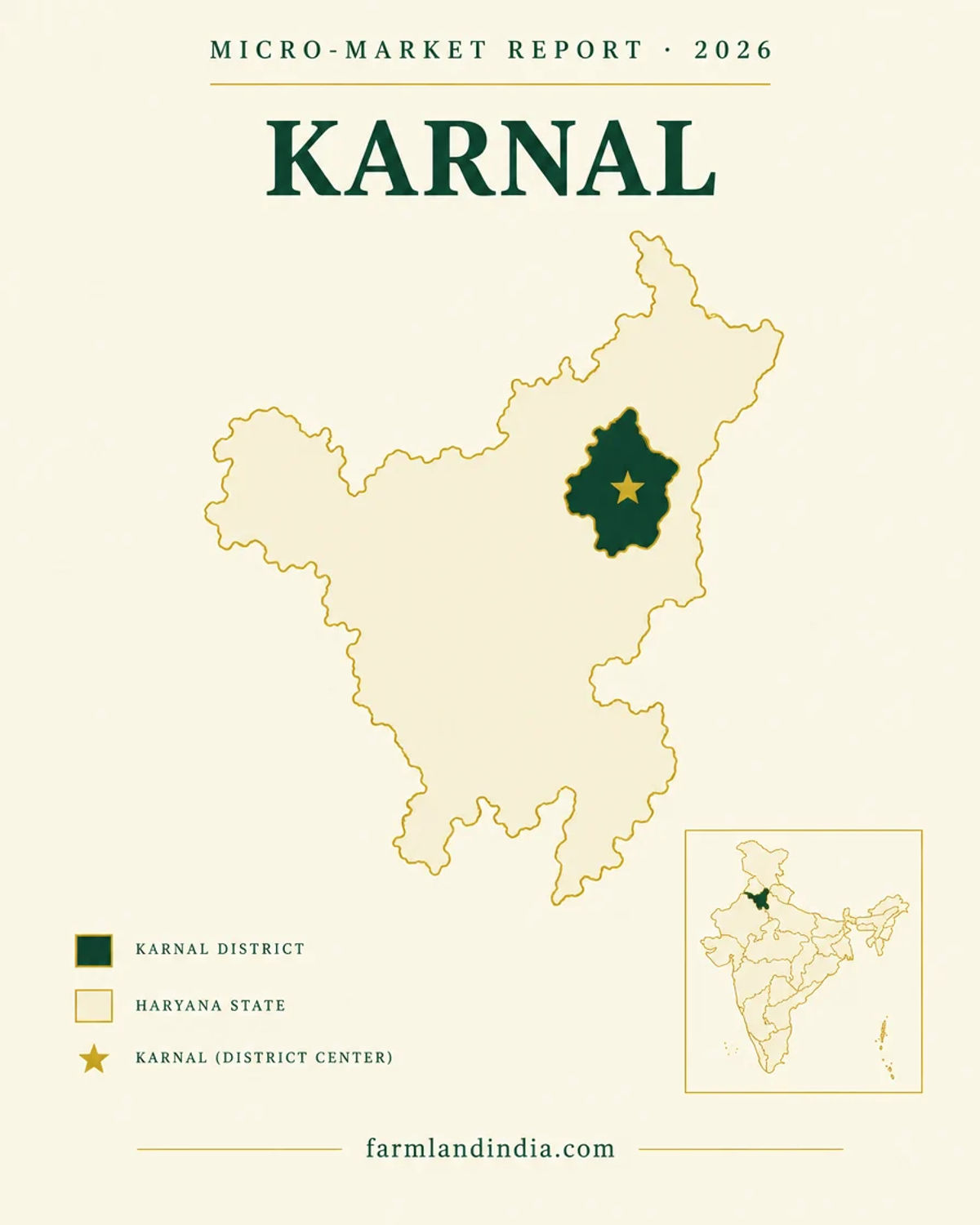
Karnal covers 2,471 sq km on the district portal, the eighth largest district in Haryana, midway between Delhi and Chandigarh and bordered by Kurukshetra, Jind, Kaithal and Panipat, with the Yamuna separating it from Uttar Pradesh (Karnal district portal, October 2026). The portal lists five tehsils (Karnal, Indri, Nilokheri, Assandh, Gharaunda) and eight blocks (Karnal, Indri, Nilokheri, Nissing, Assandh, Gharaunda, Kunjpura, Munak). Its directory adds a Nigdhu office, and the 2023 collector-rate notice listed rate files for Nissing and Ballah as well (Karnal district notice, March 2023), so confirm the current tehsil list with the Deputy Commissioner's office.
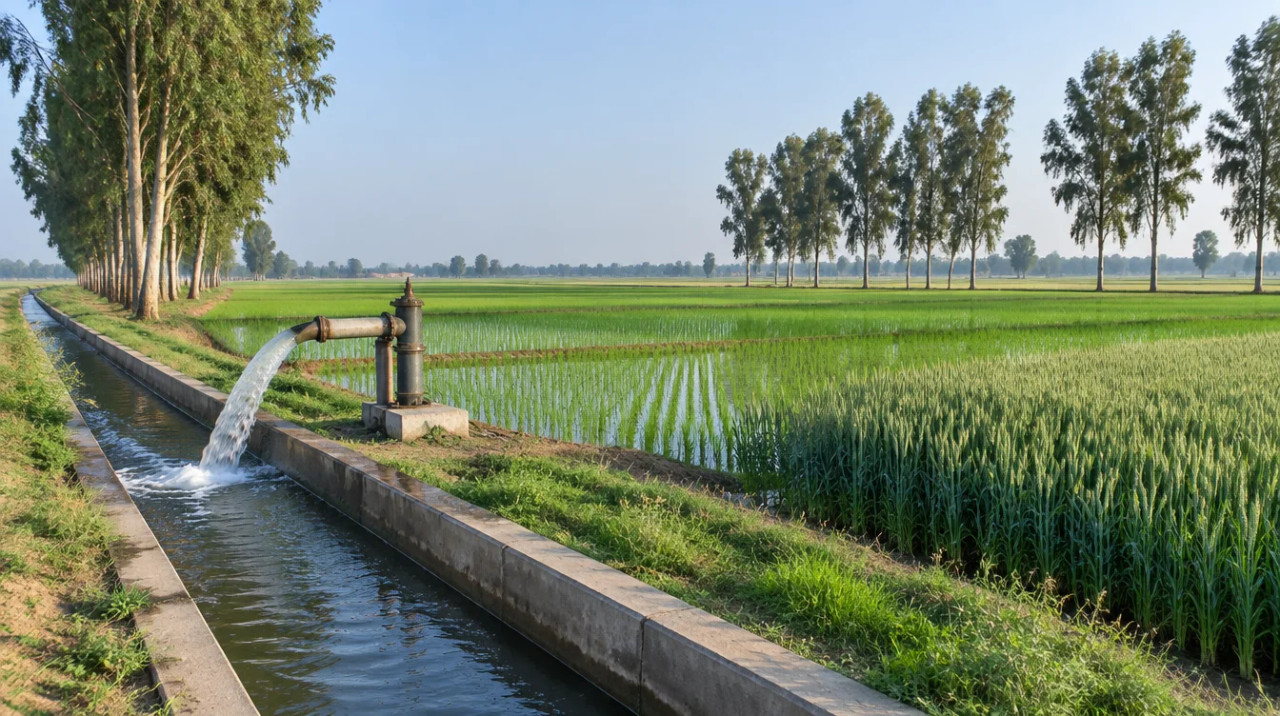
Karnal is mainly a working crop district. The CGWB district booklet (2013) puts rice at about 1.73 lakh ha and wheat at about 1.71 lakh ha, with sugarcane near 11,000 ha. The Tribune, October 2025 reported paddy on 4.5 lakh acres that season, of which 1.15 lakh acres was basmati. Basmati carries a geographical indication, registered on 15 February 2016 (APEDA).
There is no sourced per-acre price series for Karnal, so we publish none. The nearest official yardstick is the 2026 collector-rate list, set village by village. In Nilokheri tehsil it shows irrigated normal-grade land at about ₹34.7 lakh per acre in Amargarh (up 10%) and ₹64.8 lakh in Taraori (up 60%) (Haryana collector-rate list, printed April 2026). Those are a sample from one tehsil, not a district average.
The big infrastructure items are the Delhi–Karnal rapid rail corridor of about 136 km, which the Haryana cabinet approved on 24 March 2026 (Indian Infrastructure, March 2026), and the outer ring road, reported 95% complete in June 2026 (The Tribune, June 2026). The Yamuna floodplain on the eastern edge flooded in July 2023 and again in August to September 2025 (The Tribune, August 2025).
- Basmati Rice
- Paddy and Wheat
- Gharaunda
- Indri
- Nilokheri
- Outer ring road
Market bands
Sub-area price bands — Karnal
Official references only: final and proposed collector rates, shown per acre (killa = acre). No listing-site asking prices are used. Sub-areas with no sourced figure are left out.
* Indicative market range compiled from listed inventory and public circle-rate references. Not a valuation, an offer, or a guarantee of transaction price. Verify current DLC / circle rates with the sub-registrar before transacting.
Trend describes a historical movement over the stated period. It is not a projection or a forecast of future prices.
Transaction costs
Stamp duty & registration in Karnal
7%
Stamp duty — male buyer
rate stated for sale deeds, incl. 2% development fee; rural schedule not opened
5%
Stamp duty — female buyer
rate stated for sale deeds; rural schedule not opened
Not sourced
Registration fee and rural rates
no government schedule opened; confirm with the Sub-Registrar
Duty is assessed on the higher of the deal value and the collector rate; we did not open an official schedule to confirm that rule. On 28 August 2025 the Chief Minister said sale-deed duty had been 7% (including a 2% development fee) for men and 5% for women since 2008, with no new registration tax, and that residential plots of up to 50 sq yd in urban areas and 100 sq yd in rural areas allotted under housing schemes pay no stamp duty (The Tribune, August 2025). We found no government page giving a rural rate or the registration fee, so we quote neither; ask the Sub-Registrar at the tehsil. Karnal's collector rates are revised every year: the district proposed a rise of 10% to 20% for 2025-26 (The Tribune, March 2025), the last revision before that took effect in December 2024, and the final 2026 list for Nilokheri tehsil was printed on 6 April 2026 (Haryana collector-rate list). We read that one tehsil only.
Know the belt
What is moving prices in Karnal
Official numbers, all partial: a final 2026 collector-rate list for one tehsil and news reports of district-wide proposals. No listing-site prices are used.
Nilokheri tehsil: final 2026 collector rates
Irrigated normal grade: about ₹34.7 lakh to ₹74.1 lakh per acre across the first 40 villages listed
The state portal carries a list headed "Final Collector Rates for 2026" for Nilokheri tehsil, printed 6 April 2026 (rate list). In the part we read, many irrigated normal-grade rates are ₹34.7 lakh per acre, up 10% on 2025, with Amargarh at ₹34.7 lakh and Taraori at ₹64.8 lakh (up 60%). A few villages are much higher, up to ₹74.1 lakh. The file extracts with garbled village names, so we name only the two we could read with confidence.
Check: the rate for your village and land class (normal or prime) on the sale-deed date.
Karnal district: yearly revision
Proposed 10% to 20% for 2025-26; no per-acre figure
The Tribune, 25 March 2025 reported that the district proposed a 10% to 20% rise from 1 April 2025, with a dealers’ association objecting after the December 2024 revision (The Tribune, November 2024). Statewide, The Tribune, March 2026 described rises of up to 75% for 2026. We have not seen the other Karnal tehsil lists.
Check: the collector-rate files at the Deputy Commissioner’s office.
Asking prices
No sourced price series
Listing-site asking prices for Karnal could not be traced to registered deals, so none are shown. The collector rate is the only official reference and it is a floor for registration, not what a seller will accept.
Check: registered sale deeds in the same revenue estate before negotiating.
Infrastructure and land
No sourced effect on prices
The ring road, the proposed rapid rail corridor and the city flyovers are discussed in the connectivity and infrastructure sections. We found no study or registered-deal series that measures their effect on land prices in Karnal, so we make no claim about it.
Units: killa, kanal, marla
Haryana land is sold by the killa (1 acre), kanal (605 sq yd) and marla (30.25 sq yd). Jamabandi records use kanal-marla, so convert any quote to acres and confirm the share of the khewat or khasra being sold. We did not open a revenue manual for these unit definitions, so confirm them with the patwari.
Connectivity
How Karnal connects — road, rail and air
Distances to Chandigarh and Delhi are not given because no official or news source was found. Journey times vary with traffic and road works.
By road
By air
By rail & metro
The practical question is the last leg from the highway to the parcel; ask for the access road in the revenue record. Full Haryana rules for buyers from outside the state: Haryana agricultural land rules.
Growth catalysts
Upcoming infrastructure & developments
Status labels reflect sources read in October 2026. Government-announced timelines are not guaranteed; items marked confirm have a single or an older source.
01Near completion
05In progress or pending
Agriculture & terrain
Soil, crops & water in Karnal
A loamy paddy-wheat-basmati district where irrigation leans on tubewells, groundwater is over-drawn and the Yamuna can flood the east.
🌾 Alluvial plains (Karnal, Indri, Assandh, Gharaunda)
The ICAR-CRIDA district plan (crop data for 2008-09, so dated) gives loamy soil on 64% of the area and sandy loam on 36%, a net sown area of 220,100 hectares and a cropping intensity of 175%, with rice on 168,000 hectares, wheat on 169,000 and sugarcane on 12,400 (ICAR-CRIDA Karnal plan). The CGWB booklet gives rice at about 1.73 lakh ha and wheat at 1.71 lakh ha (CGWB profile). Village-level soil data: Soil Health Card portal (not opened for this page).
- Paddy
- Wheat
- Sugarcane
🍚 Paddy and basmati
The Tribune reported paddy on 4.5 lakh acres in the 2025 season, of which 1.15 lakh acres was basmati (The Tribune, October 2025). Basmati has a geographical indication registered on 15 February 2016 (APEDA). The district portal names three agro-climatic regions, Khadar, Bangar and Nardak, without describing them (Karnal district portal), so ask the patwari which one a village sits in.
- Basmati
- Paddy
- GI-registered
🌊 Yamuna belt and flood risk
On 17 August 2025 about 35 Karnal villages along the Yamuna were put on alert; the July 2023 flood, with nearly 3.60 lakh cusecs, had breached embankments at Garhpur Tapu and Samaspur (The Tribune, August 2025). On 1 September 2025 about 3.29 lakh cusecs were released from the Hathnikund barrage and crops in several Karnal villages went under water (The Tribune, September 2025). Ask the seller for flood history on any parcel near the river.
- Yamuna
- Hathnikund
- Embankments
💧 Water & rainfall
Seven of Karnal's eight blocks are over-exploited (all but Indri), and the district average water table fell from 8.57 m in 2000 to 20.29 m in 2023 (The Tribune, June 2024; block list, June 2024). CGWB's 2024 assessment puts district extraction at 173.85%, against 228.42% in Kurukshetra, 222.11% in Panipat and 190.24% in Kaithal (The Tribune, January 2025).
The 2013 CGWB booklet lists 41,973 tubewells against about 350 sq km under canals (CGWB profile); the CRIDA plan has bore wells serving 124,000 hectares, 63% of the irrigated area, and a normal rainfall of 759.5 mm (ICAR-CRIDA plan). Both datasets are old and the pumping depth has since increased.
📐 Measurement units
Haryana land units: killa = 1 acre; kanal = 605 sq yd; marla = 30.25 sq yd. Convert every quote to acres or sq yd before comparing two offers. Live wholesale mandi prices are on Agmarknet (not opened for this page); crop income is modest next to land values, so price a parcel on its location and permitted use, not on paddy or wheat yield.
At a glance
Karnal vs. its neighbours
| District / belt | Price band* (per acre) | Evidence |
|---|---|---|
| Karnal — Nilokheri tehsil villages (sample) | ₹34.7–64.8 lakh (Amargarh, Taraori) | Final 2026 collector rates, irrigated normal grade; groundwater extraction 173.85% |
| Karnal — district proposal | 10–20% rise proposed | Proposal for 2025-26, The Tribune, 25 Mar 2025; no per-acre figure |
| Kurukshetra | No sourced price series | No price figure used; groundwater extraction 228.42% (The Tribune, Jan 2025) |
| Panipat | No sourced price series | No price figure used; groundwater extraction 222.11% (The Tribune, Jan 2025) |
| Kaithal | No sourced price series | No price figure used; groundwater extraction 190.24% (The Tribune, Jan 2025) |
| Jind | No sourced price series | No figure used on this page |
*Collector rates are registration floors, not market prices, and proposed figures can change before notification. The neighbours are those the district portal lists as bordering Karnal (Karnal district portal). Groundwater extraction is shown because no sourced price series exists for the neighbours; all four districts are above the 100% mark.
Farmland India view
Why investors look at Karnal
Five reasoned points, with an honest note that the price evidence is thin and the largest catalyst is still pending.
A working crop economy on the Delhi–Chandigarh line
Rice, wheat and basmati dominate the cropped area, and the district sits between Delhi and Chandigarh on the main rail and highway axis. Income depends on the crop and on who farms the parcel, so treat yield as a small part of the case.
Road access is being rebuilt
The 34.6 km outer ring road is reported 95% complete and the city flyovers about 80%. That helps parcels near Kutail, Samalkha and the Munak and Meerut roads, but the whole network is not delivered, so price on today’s roads.
A rail corridor that is approved in the state, not yet at the Centre
Haryana approved the Delhi–Karnal rapid rail corridor in March 2026, while the final Union decision was still unconfirmed in July 2026. This desk reads it as upside to wait for, not a reason to pay a premium now.
Collector rates move every year
Karnal revises collector rates annually, and the 2026 Nilokheri list shows rises from 10% to 75% by village. They are registration floors, but they show how much the village matters.
A market that rewards paperwork
With CLU, PLPA status, flood history and groundwater all parcel-specific, a buyer who documents each one is better placed than one relying on a broker summary. The case is location and permitted use, not crop yield.
Confirm CLU, PLPA, flood and collector-rate status directly; these are not certified by Farmland India’s review.
Risks & challenges in Karnal
Read these before shortlisting in Karnal specifically.
Over-exploited groundwater
Seven of Karnal’s eight blocks are over-exploited and district extraction is 173.85%. Check borewell depth and any restriction before assuming irrigation or a farmhouse water supply.
Yamuna flooding
About 35 villages along the river were on alert in August 2025, and the 2023 flood breached embankments at Garhpur Tapu and Samaspur. Ask for flood history and check the parcel’s distance from the embankment.
CLU still required for non-farm use
A parcel in a farming district gets no exemption: a farmhouse, resort or shop needs change of land use first, and the farmhouse policy asks for at least one acre beyond 500 m of the urbanisable zone.
PLPA status unclear
Karnal is not on the Forest Department’s list of ten named districts, but the department says the Act applies to the whole state. Ask for the khasra’s status in writing.
Who is cultivating the parcel
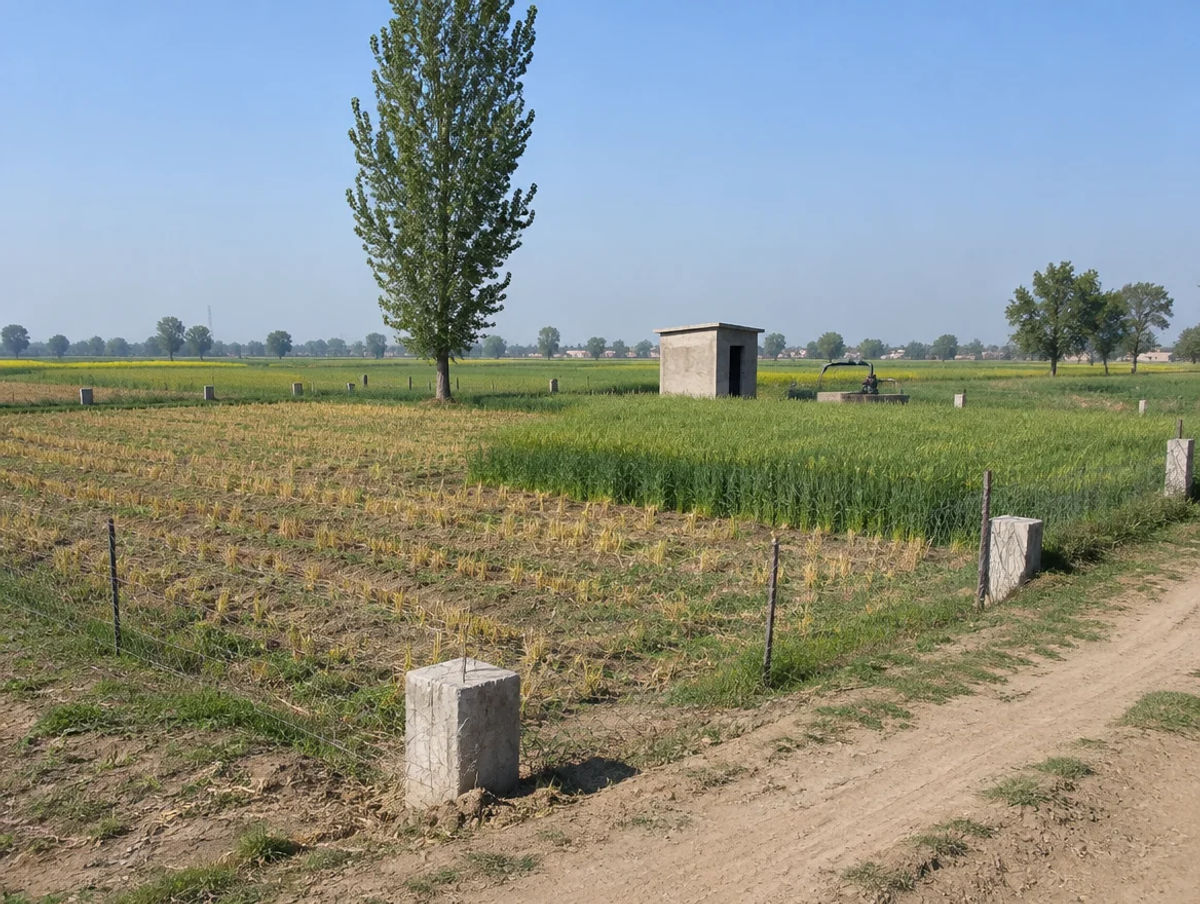
Land in active cultivation may be farmed by someone other than the owner. Ask for the current cultivator’s name and the standing crop before paying a token amount.
Collector-rate churn
The 2026 Nilokheri list shows rises of up to 75% in some villages, and the district proposed 10% to 20% for 2025-26. Check the rate in force for the village on the sale-deed date.
Announced is not delivered
The rail corridor lacks confirmed final approval, the airport has a boundary wall only, the ring-road deadline has already moved from August 2025 to September 2026, and the NH-44 widening has no status report after 2023. Price on today’s fundamentals.
No sourced price series
We use no listing-site prices for Karnal, and collector rates are only a floor. Collect registered comparables before negotiating.
Who to contact
Local revenue, planning & forest offices
Mutation and revenue-record matters go through the Tehsildar of the relevant tehsil. The district telephone directory lists offices at Karnal (Mini Secretariat), Gharaunda (Barsat Road), Nilokheri (near the Government Press), Indri, Assandh (Salwan Road) and Nigdhu (near the grain market) (Karnal district directory). The Deputy Commissioner sits on the first floor of the Mini Secretariat in Karnal, and the District Town Planner in HSVP Complex, Sector 12, where CLU files start before they go to the Directorate of Town and Country Planning (DTCP Haryana). The directory lists no Sub-Registrar offices, so ask the tehsil where sale deeds are registered. The Forest Department (Forest Department PLPA page) confirms whether a khasra falls under a PLPA notification. Collector rates are on the state collector-rate portal, with the district’s proposed lists posted on the Karnal district portal, and records on jamabandi.nic.in. We did not open the DTCP and collector-rate portal home pages for this page, and the directory shows officers as of its last update, so check names and addresses before visiting.
KEEP EXPLORING
Explore more areas
Micro-markets in Karnal
Other districts in Haryana
Guides & research
- Kanal and Marla in Haryana and Punjab — Conversion GuideWiki · P01 Land Measurement Units
- Bhu Naksha Haryana: View Land Map Online (2026 Guide)Wiki · P02 Land Records & Documentation
- Mutation Status Haryana: How to Check Online (2026)Wiki · P02 Land Records & Documentation
- Jamabandi Nakal Haryana: How to Read & Get a CopyWiki · P02 Land Records & Documentation
- Stamp Duty Haryana: Land Registry Charges (2026)Wiki · P11 Taxation, Stamp Duty & Registration
- Land Ceiling in Haryana: 1972 Act Explained (2026)Wiki · P05 Agricultural Land Rules
- Circle Rate Faridabad: Collector Rate Lookup (2026)Wiki · P11 Taxation, Stamp Duty & Registration
- Circle Rate Gurgaon: Collector Rate Lookup (2026)Wiki · P11 Taxation, Stamp Duty & Registration
COMMON QUESTIONS
Frequently asked questions
Everything buyers, NRIs and investors ask before their first reviewed farmland purchase in Karnal.
Visit full wiki01 of 04
Can an outsider buy agricultural land in Karnal?
We know of no residence bar for Indian buyers in Haryana, but we did not open an official page that says so, so confirm with a Haryana revenue lawyer. The Ceiling on Land Holdings Act, 1972 caps a family's holding (7.25 hectares where assured irrigation gives two crops a year). NRIs and OCIs cannot buy agricultural land under the RBI's 2018 regulations.
02 of 04
What does agricultural land cost in Karnal?
We publish no per-acre band, because listing-site asking prices could not be traced to registered deals. The final 2026 collector-rate list for Nilokheri tehsil, printed 6 April 2026, shows irrigated normal-grade land at about ₹34.7 lakh per acre in Amargarh and ₹64.8 lakh in Taraori. Those are village samples from one tehsil, and collector rates are registration floors, so check the rate for your village at the tehsil.
03 of 04
What stamp duty applies to land in Karnal?
The only rates we could source are urban: 7% for men, including a 2% development fee, and 5% for women, reported by The Tribune on 28 August 2025. We found no sourced schedule for rural and agricultural land or for the registration fee, so confirm both with the Sub-Registrar before you sign.
04 of 04
Which infrastructure affects Karnal?
The Tribune reported the 34.6 km outer ring road about 95% complete on 23 June 2026, with a deadline of end-September 2026, and the city flyovers about 80% complete for January 2027. The Delhi-Karnal rail corridor of about 136 km was approved by the Haryana cabinet on 24 March 2026, but final Union approval is unconfirmed, and the airport plan has a boundary wall only.
Transparency
Sources and references
Law and courts
- Haryana Ceiling on Land Holdings Act, 1972 (s. 4), India Code
- Haryana Development and Regulation of Urban Areas Act, 1975 (ss. 3, 7), PRS Legislative Research copy
- Foreign Exchange Management (Acquisition and Transfer of Immovable Property in India) Regulations, 2018, Reserve Bank of India
- M.C. Mehta v. Union of India (Kant Enclave), Supreme Court, 11 Sep 2018 (PLPA-notified land)
Government
- About Karnal district (area, tehsils, blocks, agro-climatic regions), Karnal district portal
- Telephone directory (tehsil offices, Deputy Commissioner, District Town Planner), Karnal district portal
- Notice on revision of collector rates 2023-24 (rate files by tehsil), Karnal district portal
- Final Collector Rates 2026, Nilokheri tehsil, Karnal, printed 6 Apr 2026, Haryana collector-rate portal (we read one tehsil)
- Ground Water Information Booklet, Karnal District, Central Ground Water Board, 2013 (resource data as of March 2011)
- Dynamic Ground Water Resources of Haryana 2024, Central Ground Water Board
- District agriculture contingency plan, Karnal, ICAR-CRIDA (crop data 2008-09)
- Punjab Land Preservation Act page, Haryana Forest Department
- Basmati Export Development Foundation, APEDA (GI registration, 15 Feb 2016)
- Agmarknet (agmarknet.gov.in), the Jamabandi land-records portal, the DTCP site and the collector-rate portal home pages were not opened by us for this page; check them directly.
News
- Karnal to get traffic relief as outer ring road project nears completion, The Tribune, 23 Jun 2026
- 30% work on Greenfield Eastern Bypass complete, The Tribune, 6 Jun 2024
- Karnal’s elevated flyover project 80% complete, The Tribune, 14 Jun 2026
- Work to remove bottleneck on NH-44 to begin by Oct-end, The Tribune, 8 Sep 2023
- Haryana cabinet approves Delhi-Panipat-Karnal RRTS corridor, ThePrint, Mar 2026
- Government of Haryana approves Delhi-Karnal RRTS project, Indian Infrastructure, 26 Mar 2026
- Delhi-Bawal and Delhi-Karnal corridors get central panel nod, Swarajya, Nov 2025
- Delhi to Karnal, Jewar airport by Namo Bharat: 4 proposed routes, Business Today, 29 Jul 2026
- Namo Bharat on the Delhi-Karnal route, India TV, 23 Apr 2026
- Rapid rail transit plan to Karnal raises hope among residents, The Tribune, 24 Oct 2024
- Left on the tarmac: Karnal’s wait for airport continues, The Tribune, 16 Apr 2025
- Govt exploring options to develop airport in Karnal, The Tribune, 14 Jun 2024
- Khattar seeks expanded rail facilities for Karnal, The Tribune, 23 Jun 2026
- Upgrade Karnal railway station, demands MP, The Tribune, 26 Mar 2022
- 5 months past deadline, widening of NH-709A not over in Karnal, The Tribune, 14 Jul 2022
- Water level rises in Yamuna, alarm sounded in 35 villages of Karnal, The Tribune, 17 Aug 2025
- Crops, roads submerged in Karnal district as Yamuna swells, The Tribune, 2 Sep 2025
- Groundwater crisis, 88 of 143 blocks over-exploited, The Tribune, 15 Jun 2024 (Karnal blocks)
- 12 m in 23 years: Karnal groundwater plummeting, The Tribune, Jun 2024
- Karnal mandis see paddy arrivals spike, The Tribune, 20 Oct 2025 (paddy 4.5 lakh acres, basmati 1.15 lakh acres)
- Hike in collector rates proposed in Karnal district, The Tribune, 25 Mar 2025
- Stamp duty waived on 50 sq yard urban, 100 sq yard rural plots, The Tribune, 28 Aug 2025
- Haryana govt okays eco-friendly farmhouses near urban areas, The Tribune, 21 Sep 2021
Further reading
- Haryana hikes collector rates by up to 75%, The Tribune, 29 Mar 2026
- Collector rates from 1 December 2024, The Tribune, 25 Nov 2024
- Haryana’s 60.48% groundwater over-exploited, The Tribune, 8 Jan 2025
- Dynamic Ground Water Resources of Haryana 2024, Central Ground Water Board
- Supreme Court on forest land and the Punjab Land Preservation Act, LiveLaw, 30 Mar 2022
- State’s plan to amend PLPA may put Aravallis in danger, The Tribune, 16 Feb 2019
- RBI: 2018 rules on NRI and OCI purchases
- Haryana Ceiling on Land Holdings Act, 1972, India Code
- Haryana Forest Department: Punjab Land Preservation Act
- ICAR-CRIDA district contingency plan, Karnal
- Swarajya: Delhi-Karnal corridor gets central panel nod, Nov 2025
- The Tribune: Haryana stamp duty, Aug 2025
Data-currency note: area comes from the district portal (the CGWB booklet gives 2,520 sq km) and no population figure is shown; crop and groundwater data come from documents dated 2008 to 2013 plus the 2023 to 2024 groundwater reports; infrastructure statuses were read in October 2026 and change quickly; collector rates are final for one tehsil and proposed for the rest. Pages marked "not opened" are named only as places to check. This is a general guide, not legal advice. Report inaccuracies to wiki@farmlandindia.com. Last reviewed 13 October 2026.
For developers
Ready to explore Karnal farmland?
Browse reviewed projects and individual land parcels across Karnal — or if you own land here, list it with platform review and reach serious buyers.